So, Turkmenistan… Where do I start?
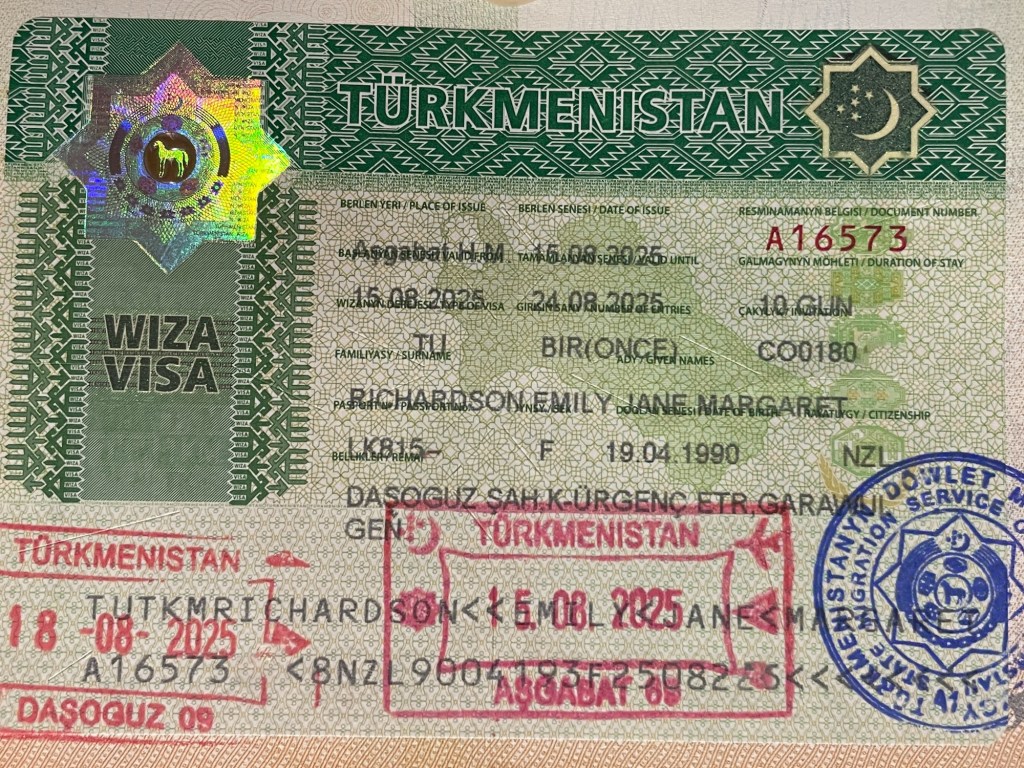
A couple of years ago I had never even heard of the country, and now there I was, on a flight from Istanbul to Ashgabat, going to visit one of the world’s least visited countries. Despite all the hassle with getting my Letter of Invitation sorted, and then the passport number on it corrected, actually arriving in Turkmenistan and exchanging my letter for a visa was surprisingly easy! I just showed up at the visa counter in the arrivals area, right next to the “bank” counter when all the Turkmenistan citizens were lining up for unknown reasons, and handed them the Letter of Invitation along with my passport. They stamped a piece of paper a couple of times and sent me off to the bank, where I was ushered forwards in front of all the locals – I guess visa fees make them more money that whatever everyone else was doing at the bank!
I paid for the visa and the compulsory covid test fee, and returned to the visa counter where my visa was ready and waiting for me in my passport. Next, I went over to the covid testing area where no attempt whatsoever was made to get me to actually do the test, and I was sent straight through to passport control. Easy!
In theory, Turkmenistan has seven “international” airports, but Ashgabat is the only one that actually has international flights, and so this was the starting place for our tour. It’s a difficult city to explain – it’s eerie, unsettling, sterile, uncanny. Often called the White City, Ashgabat consists largely of hundreds of massive marble buildings with a huge amount of empty space around them. They all look the same, but our guide tells us they are shops, apartments, universities, government buildings… Turkmenistan is the world’s largest importer of marble in the world, and this city very much explains why!
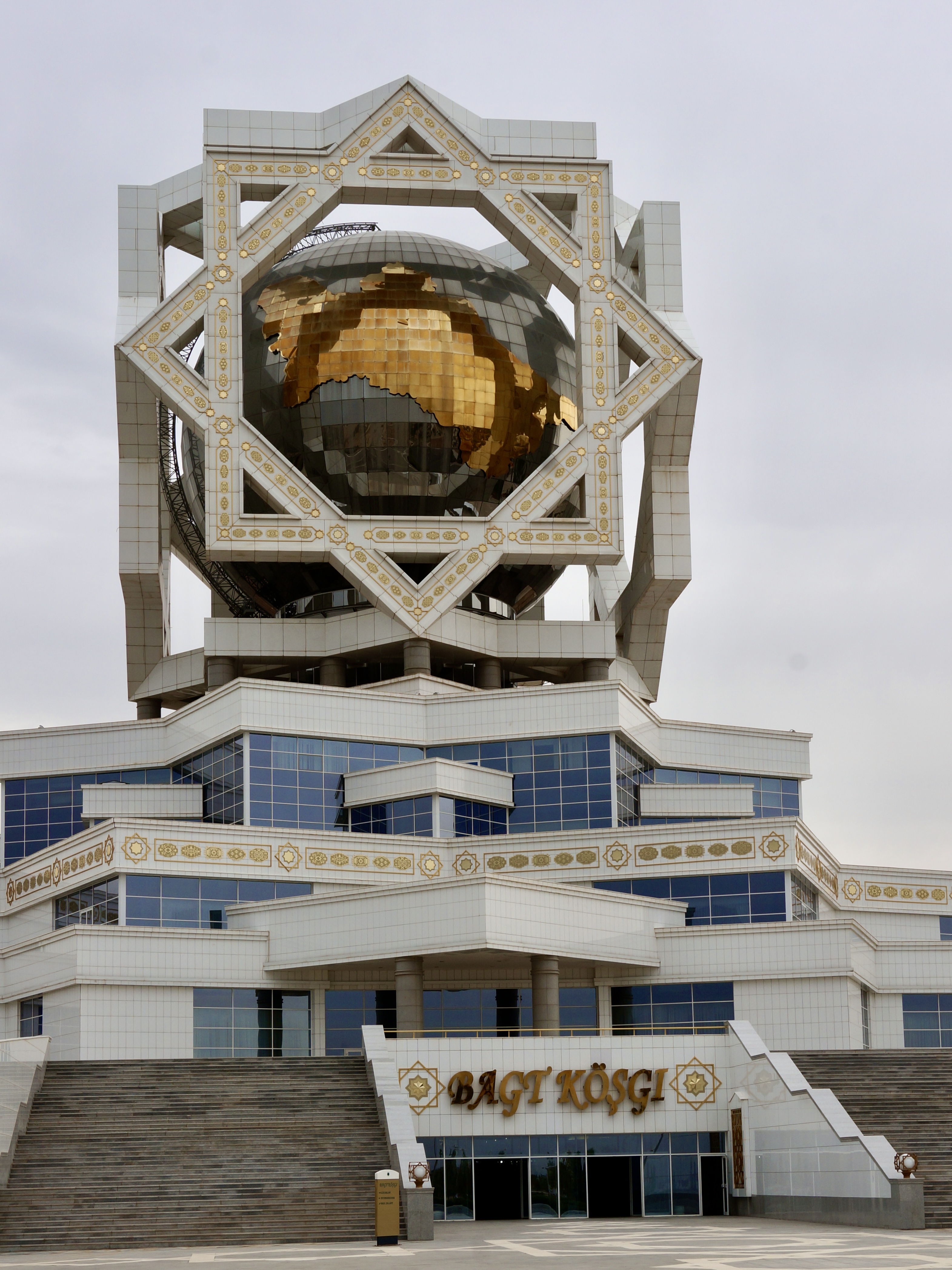
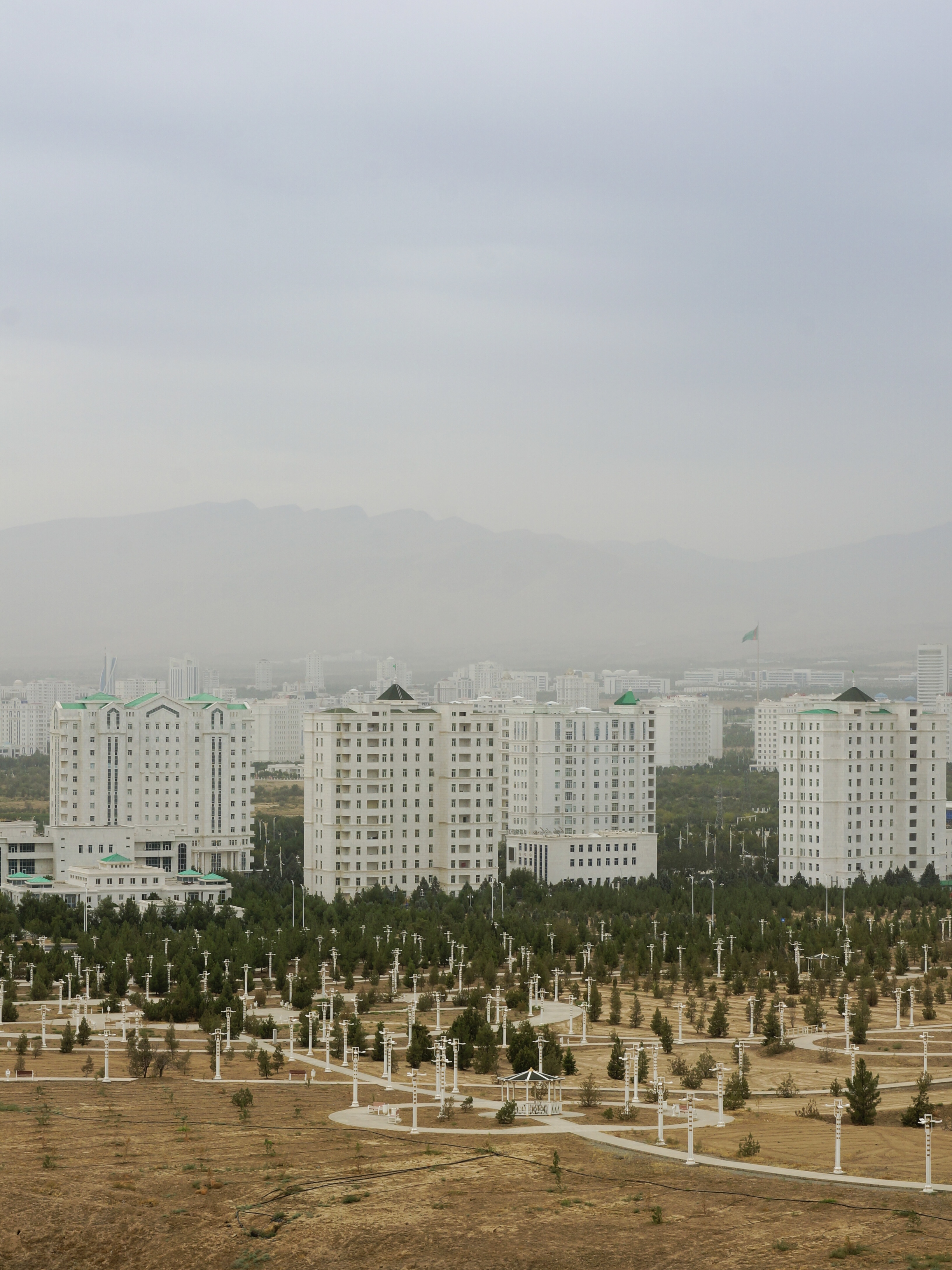
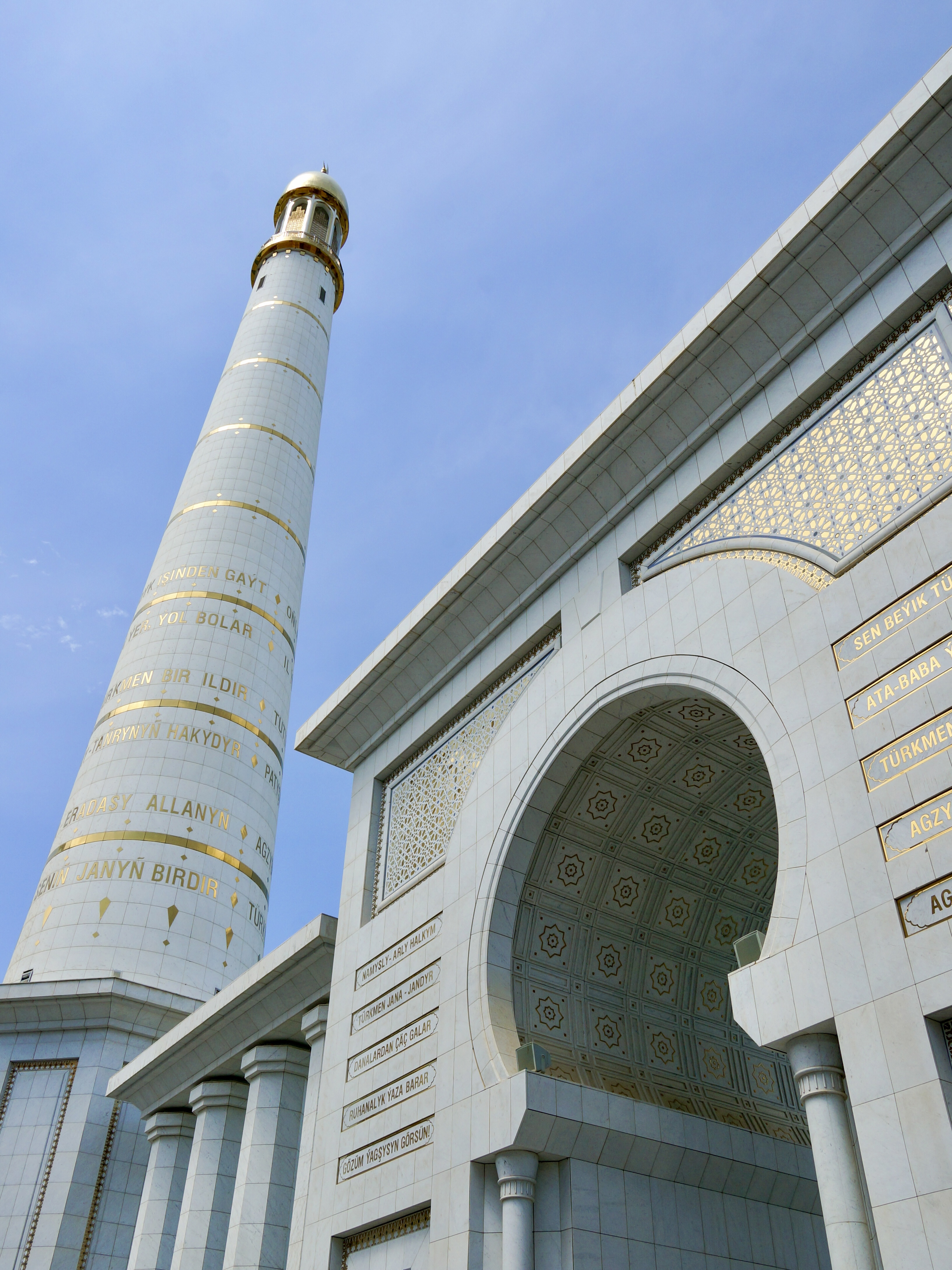
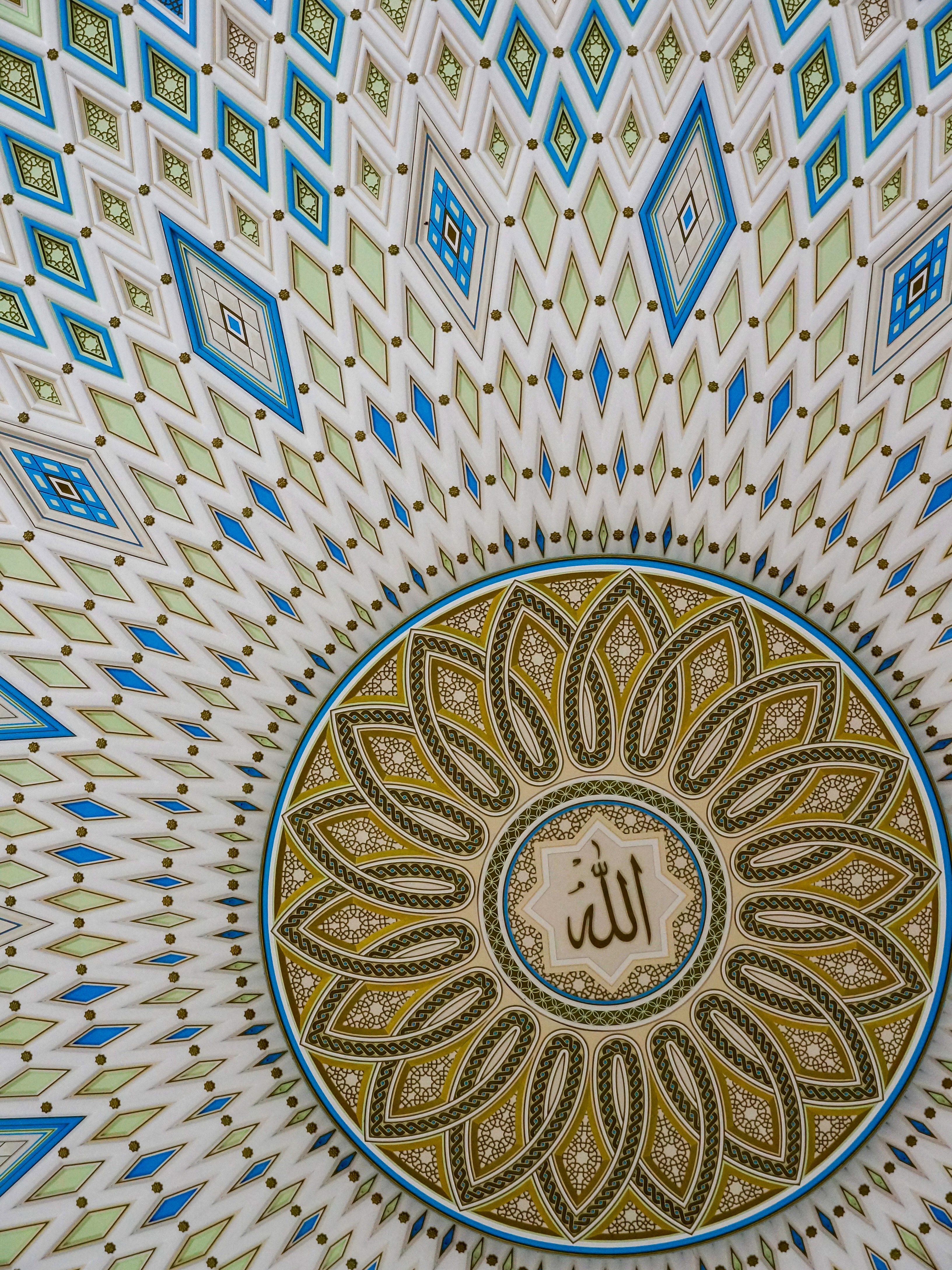
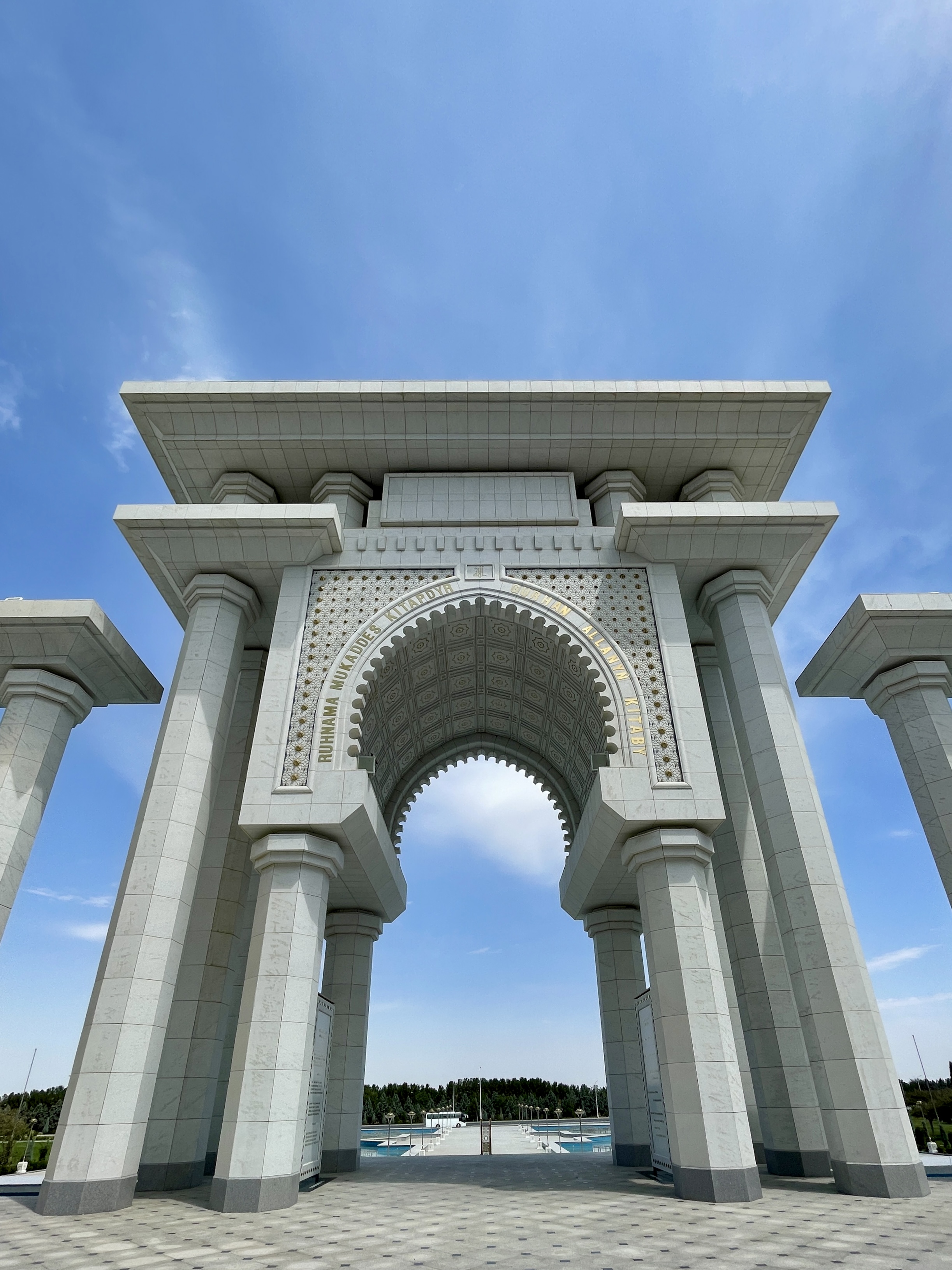
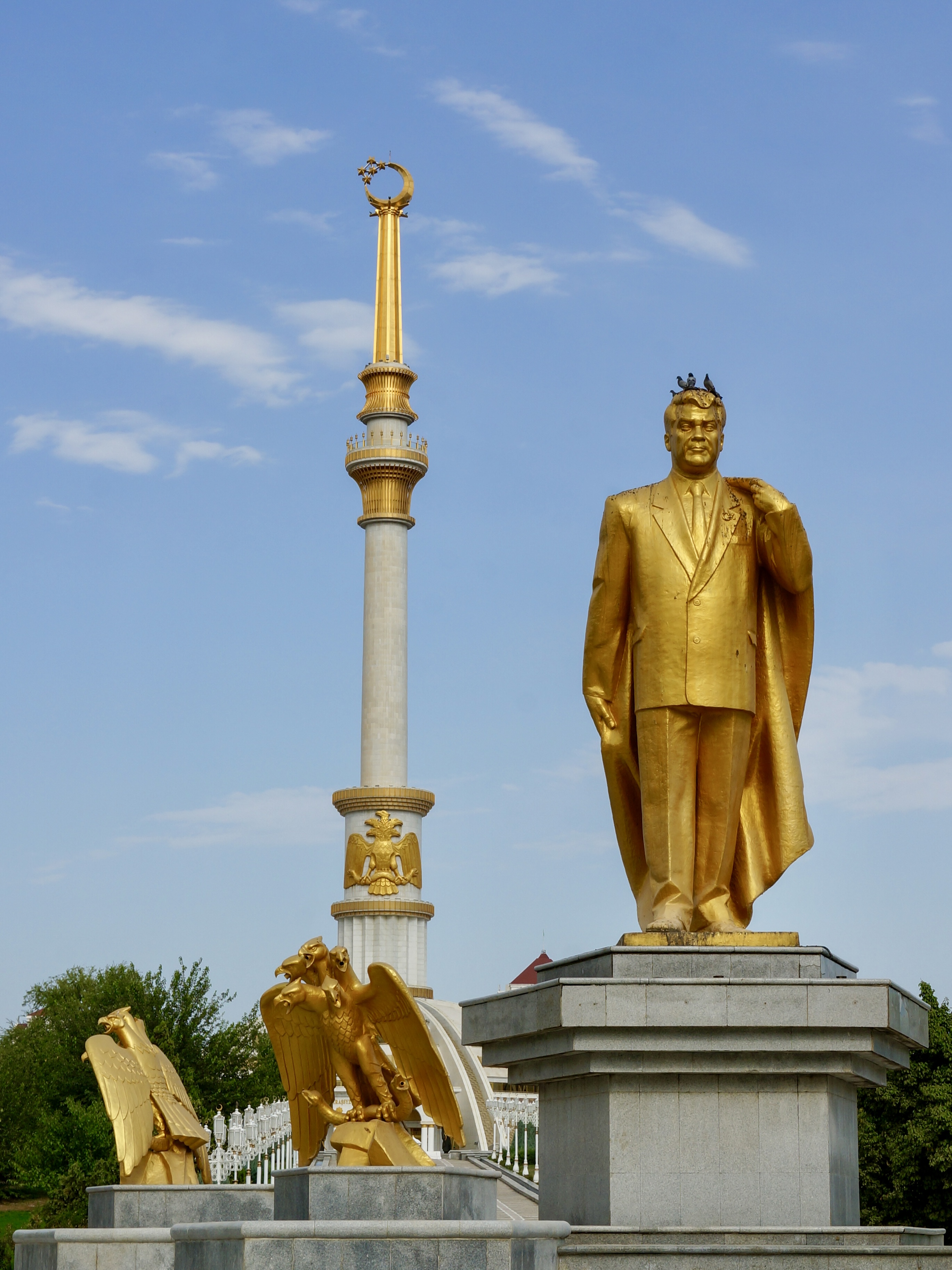
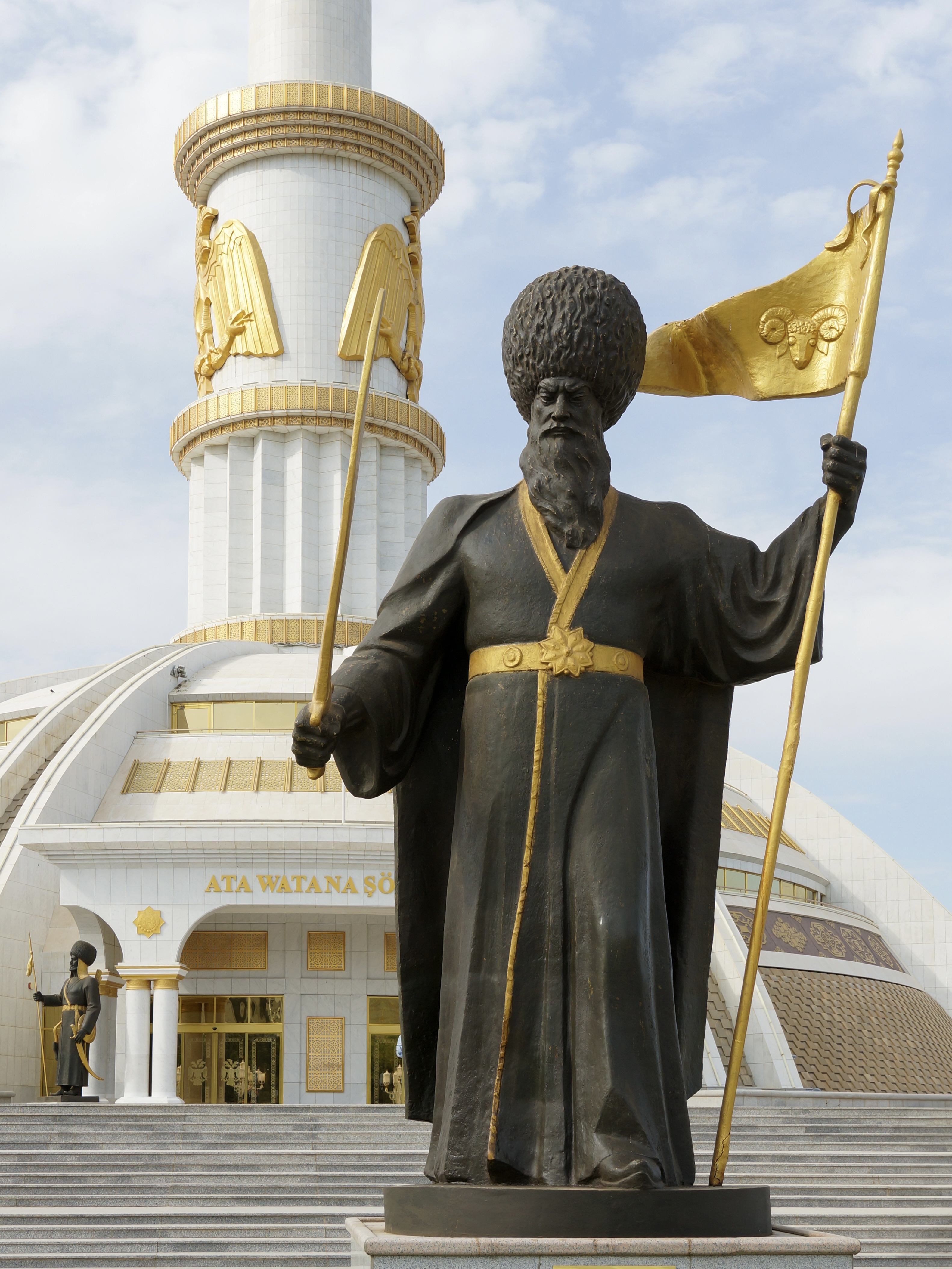
Supposedly just over a million people live in the city, but the streets are deserted. Sure, there are a few cars around, and the odd person sitting in a bus stop, but otherwise the city feels deserted. Within city limits, the only approved vehicle colours are white, silver, and gold, with all other cars being banned from entering – there are massive parking buildings on the outside of the city for people coming from out of town to leave their car if it’s the wrong colour.
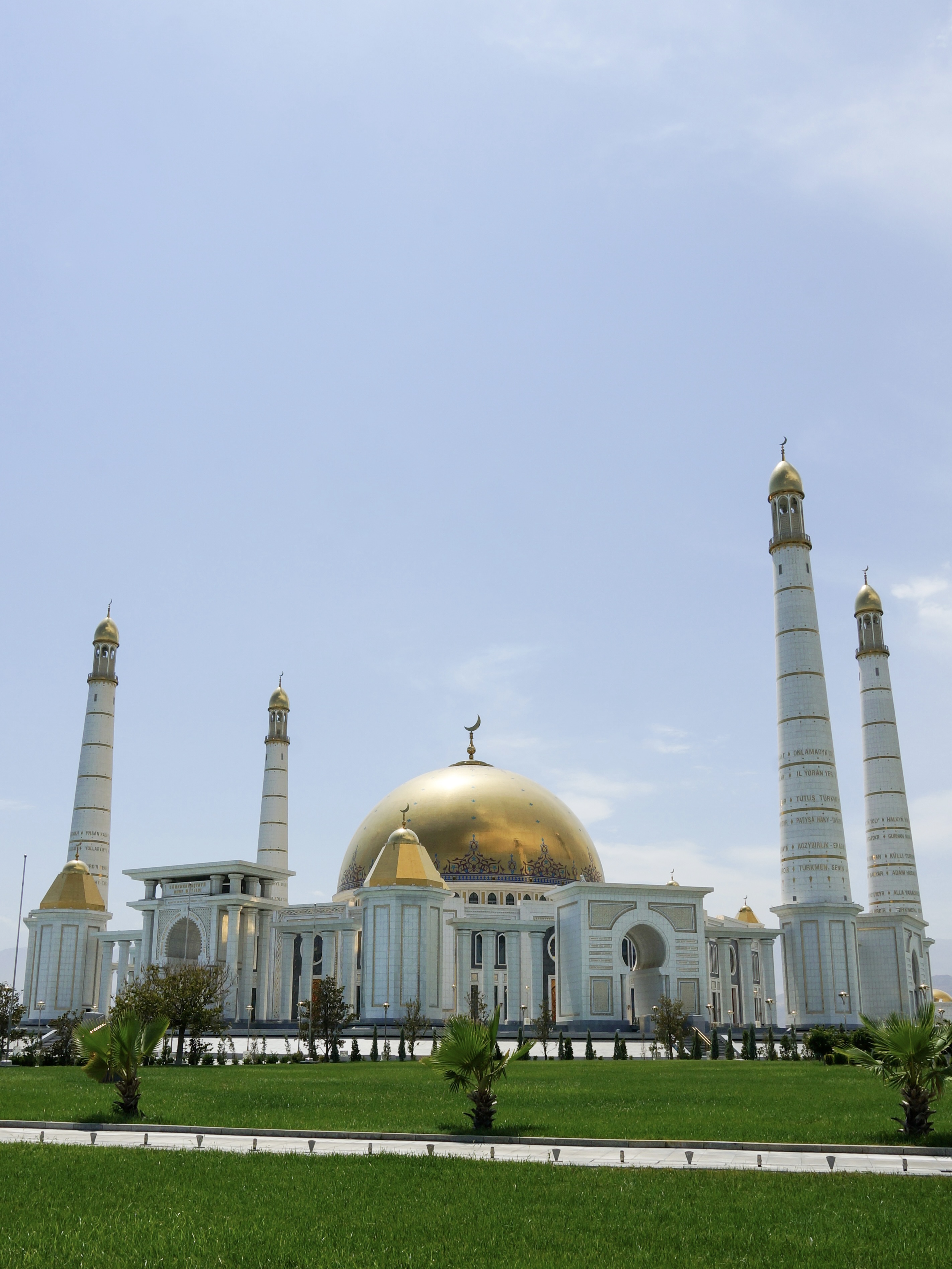
Everything in the city is white, gold, or green, even things like power poles and traffic lights. On our first day of the trip we were taken on a tour of the city, visiting while and gold monument after white and gold monument. We saw the Arch of Neutrality, Independence Park, the Wedding Palace, and Turkmenbashy Mosque and the attached mausoleum. We also saw the National Museum, which contained the most unusual pieces of art I have ever seen…
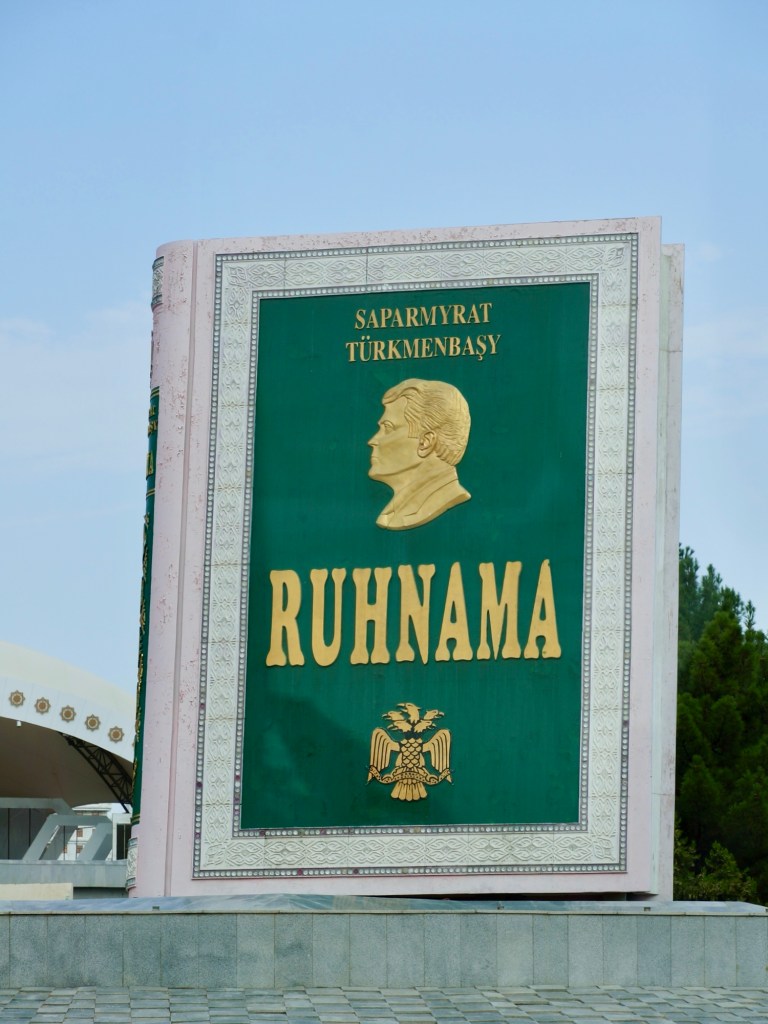
A personal highlight was seeing the Ruhnama (aka Book of the Soul) statue, even if it was just through the window of the bus. This is a book that was written by Turkmenistan’s first president which was essentially a propaganda tool that was part religious text, part (somewhat imaginary) Turkmen history, part code-of-conduct, and part autobiography.
When it was first published it was given equal standing in Turkmenistan with the Quran, its study was a significant part of the curriculum in schools, and familiarity with the text was required for things like obtaining a driving licence, entrance into higher education, or state employment. It’s said that reading it three times will grant you access to heaven. In 2005, a copy was sent to space.
Speaking of Turkmenistan’s first president, he was, in fact, a crazy man. His family was killed in the 1948 earthquake that flattened Ashgabat, so he had a hard start to life, but really, that’s no excuse. As the first president of the country after the fall of the Soviet Union, he gave himself the title Türkmenbaşy, or Head of the Turkmens, and then renamed various places around the country after himself, changed the Turkmen language so that the months and days of the week were now named after himself and his family members, and had parliament announce him “President for Life”. He is often best known for his unusual policies: Hospitals and libraries were only allowed in the capital city, whereas dogs were forbidden there. Lip-syncing was banned, along with opera, ballet, the circus, and playing music on your car radio. Men could not (and still cannot) have beards or long hair. He created a national holiday dedicated to melon. While this craziness seems mostly harmless, under his government the Turkmen people had extremely poor human rights, and his presidency was considered one of the most totalitarian dictatorships of the time. Life expectancy in Turkmenistan dropped by 15 years during his reign. When he died in 2006, he was succeeded by his dentist.
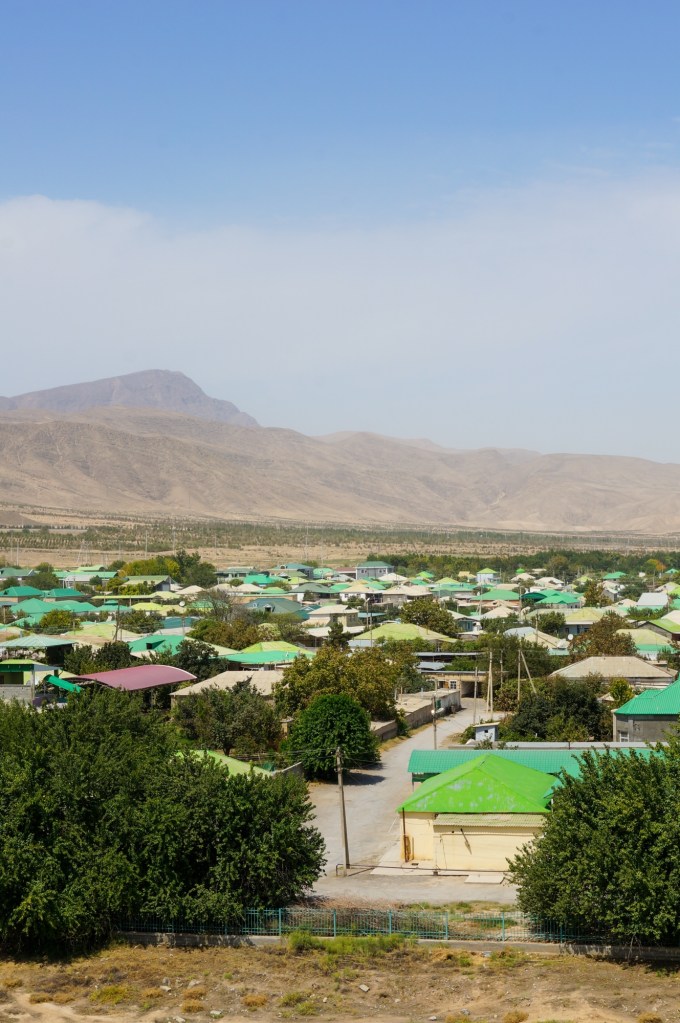
While in Ashgabat, we also visited the Old Nisa archeological site. Driving away from the centre of town, we also got away from all the marble and drove through some more “normal” residential neighbourhoods. These buildings were still white, but with green roofs, and plaster walls. The streets around them remained empty, so while they felt like more authentic areas of town, they retained that unusual deserted feeling.
Out at Nisa, we had our first photography tax experience – at various sites around Turkmenistan, they charge you a 50 manat fee if you want to take photos, even if it’s just the odd phone-photo. At the official exchange rate, this would be a NZ$25 fee, which is insane, but when we arrived our guide helped us exchange our money at the significantly more favourable unofficial rate that meant this fee was now NZ$5 (which is still a little crazy for a couple of photos, but at least it’s not $25!!)
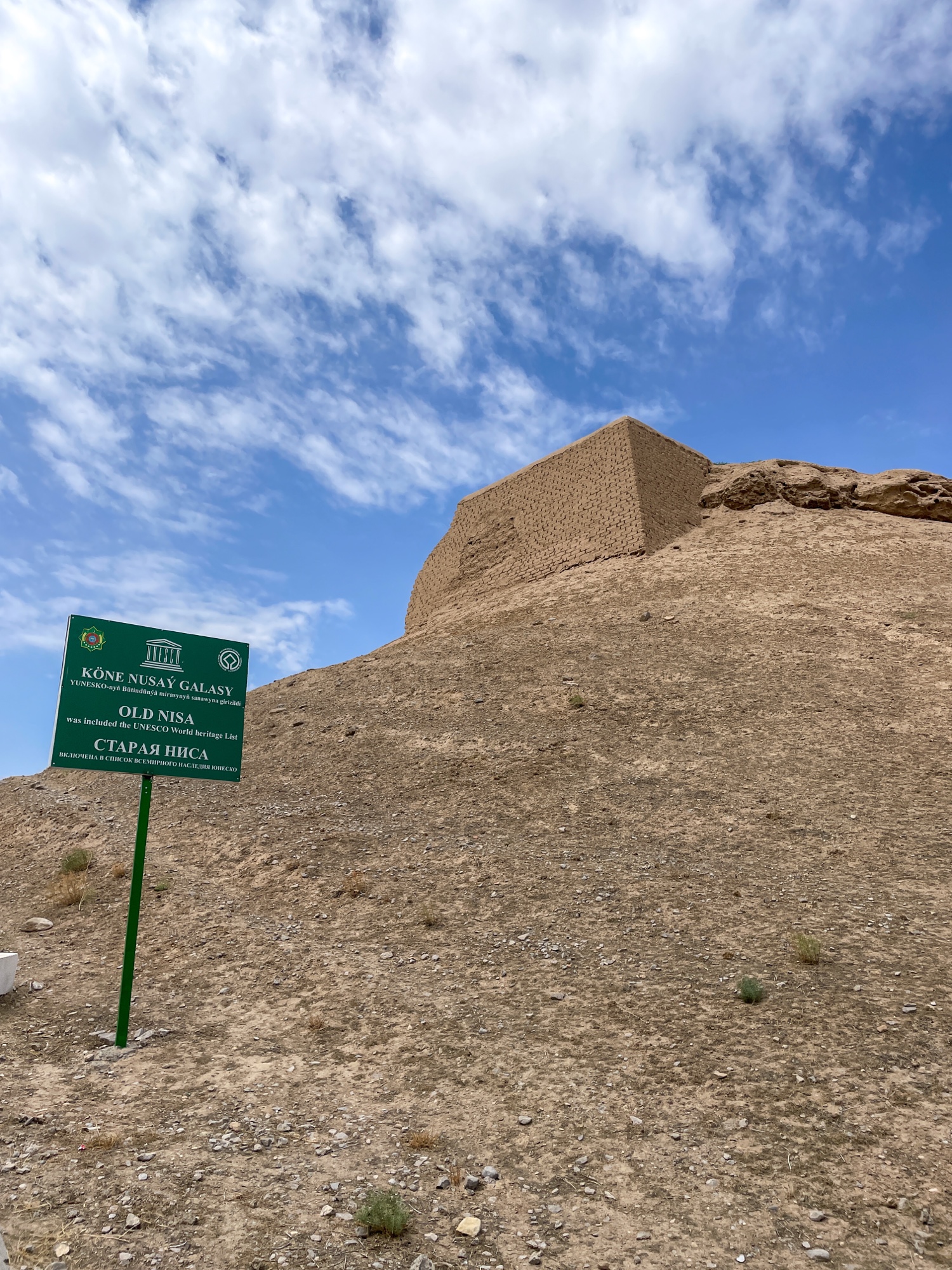
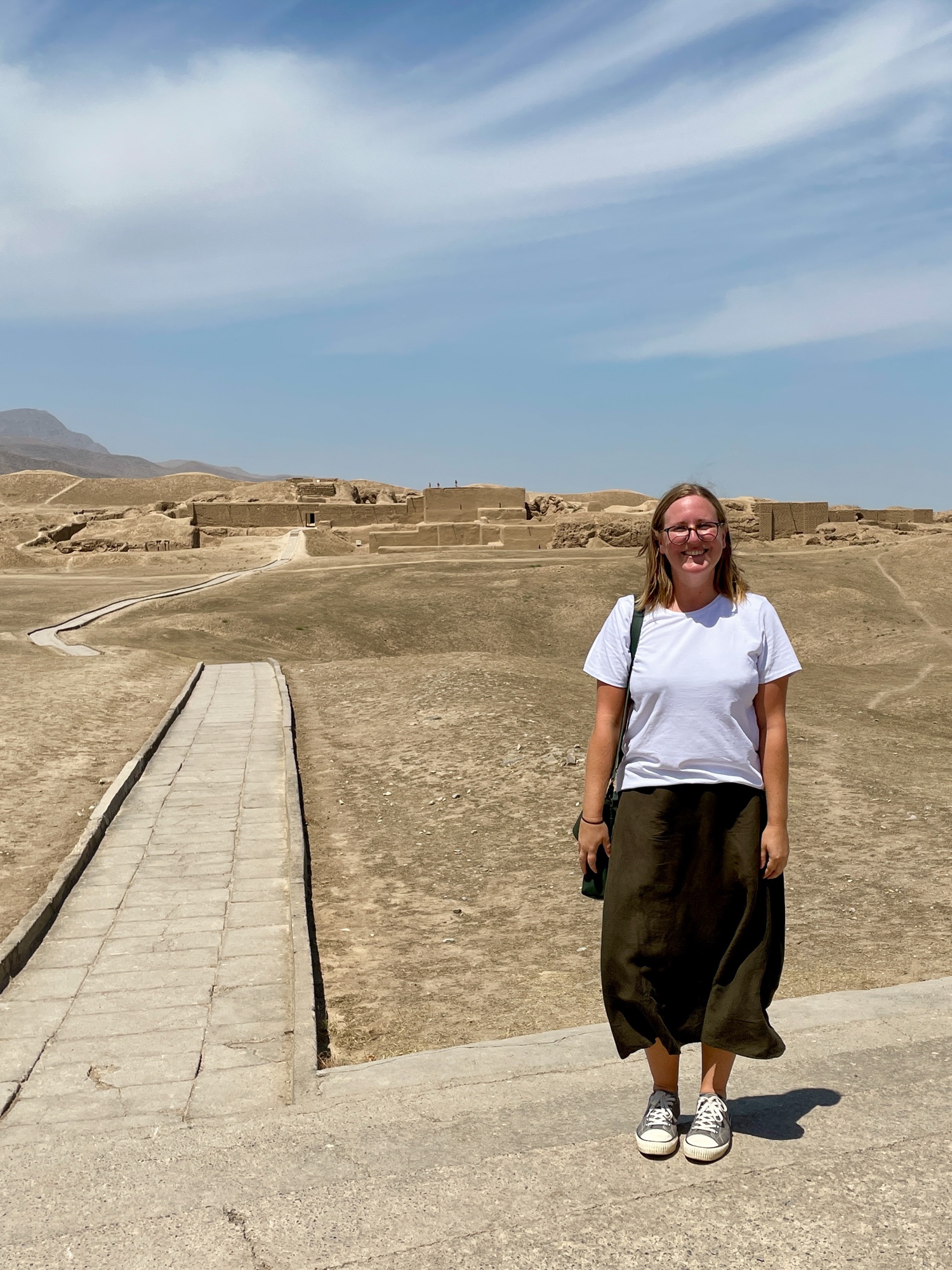
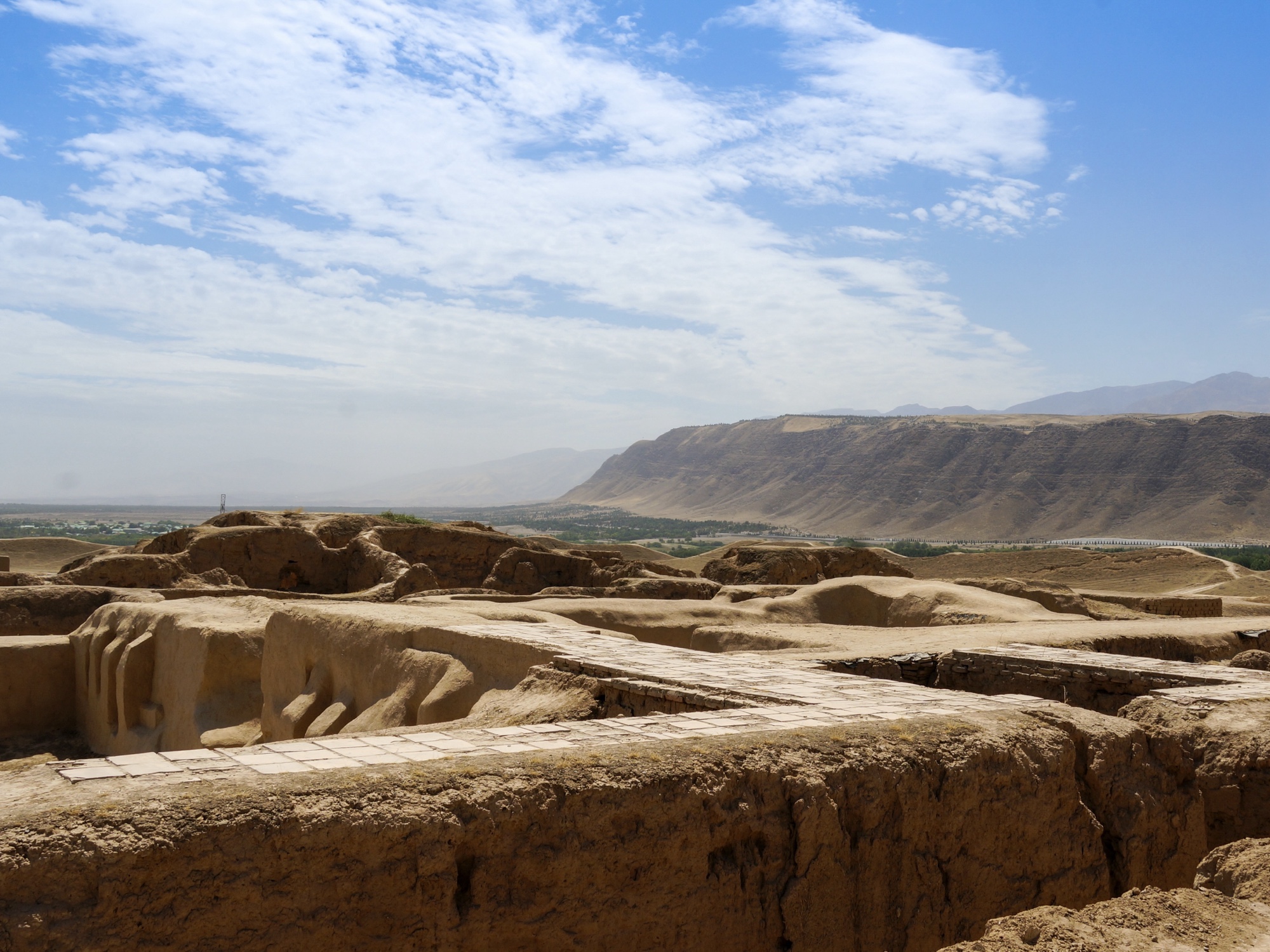
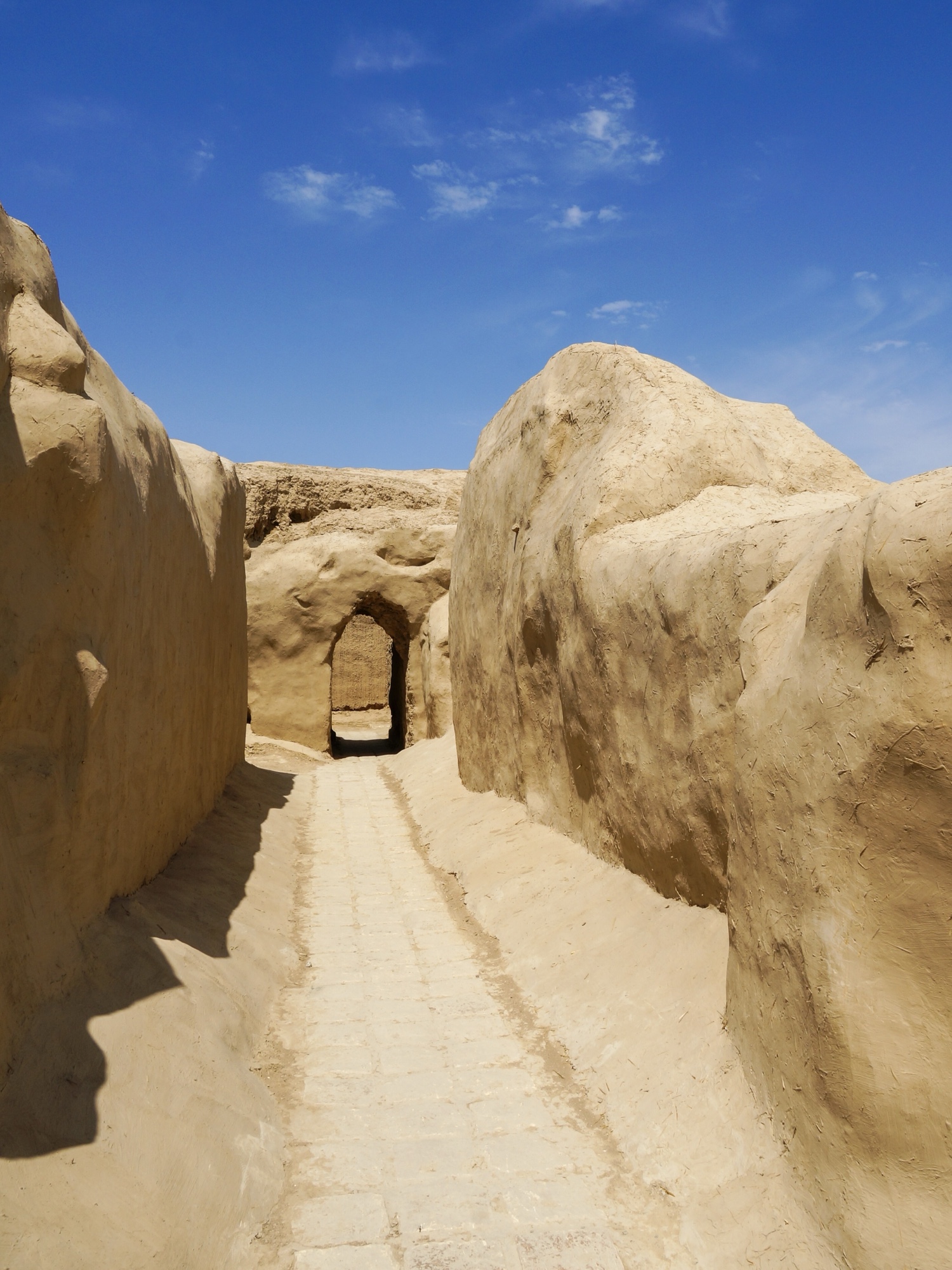
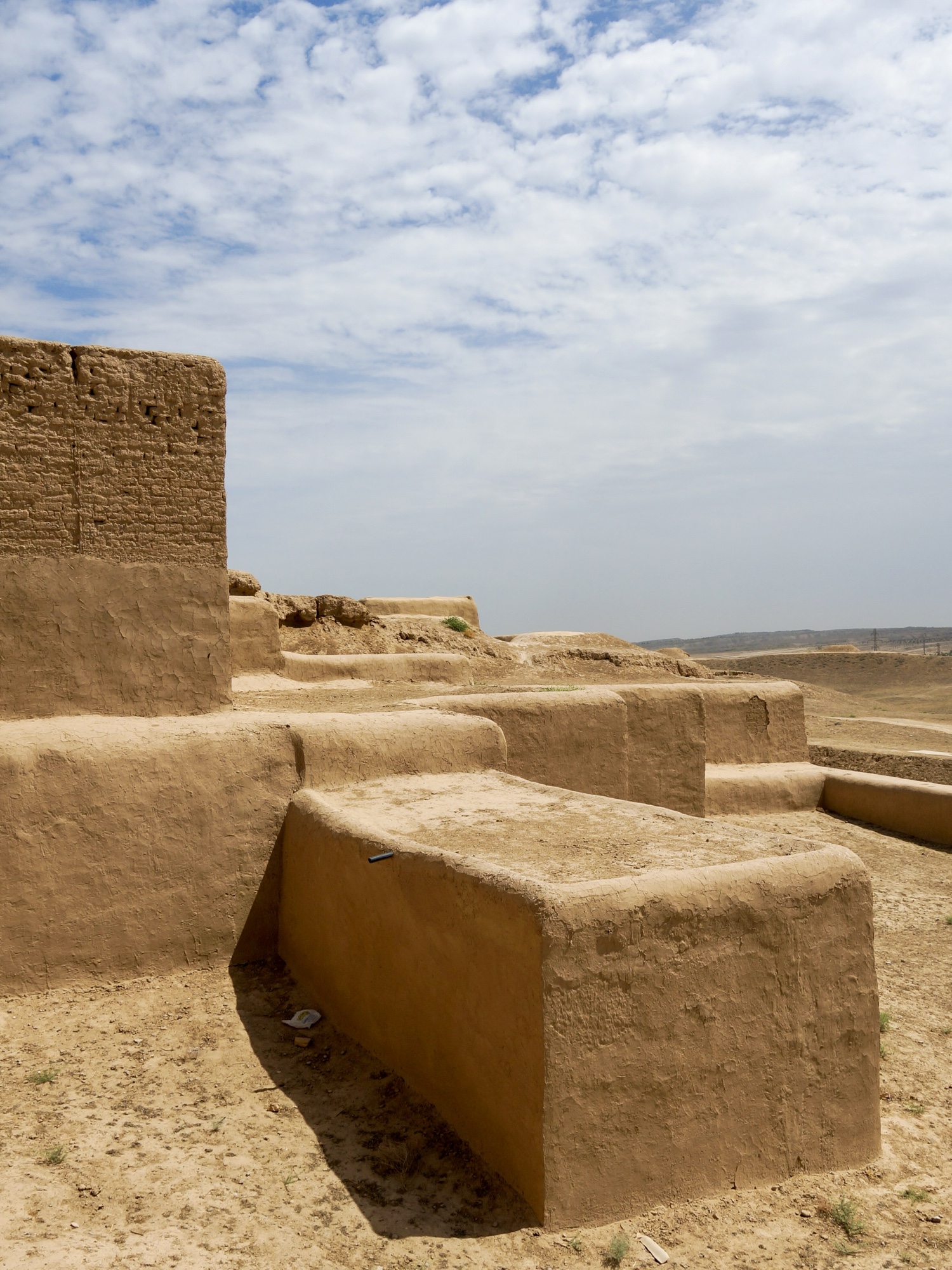
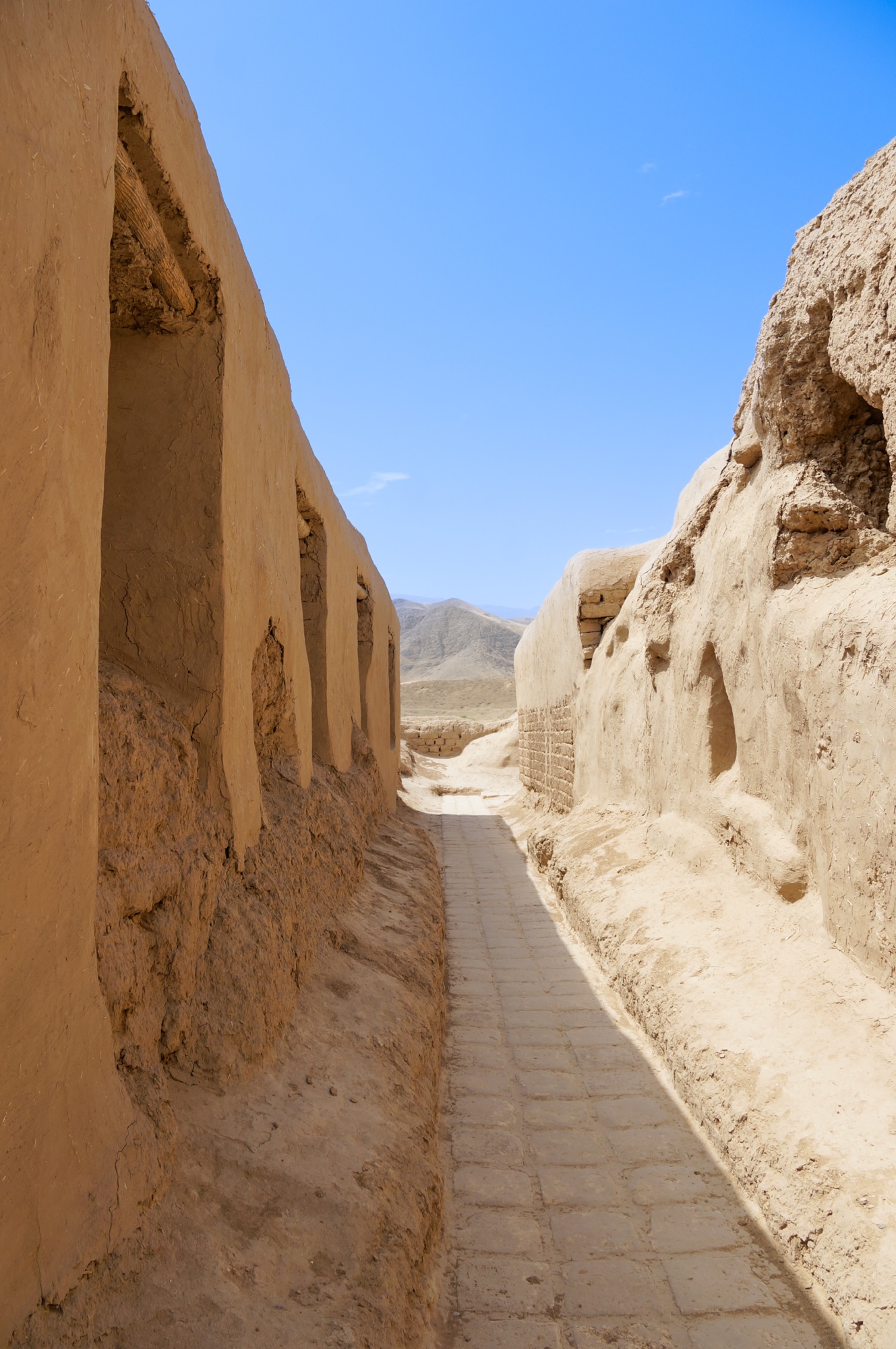
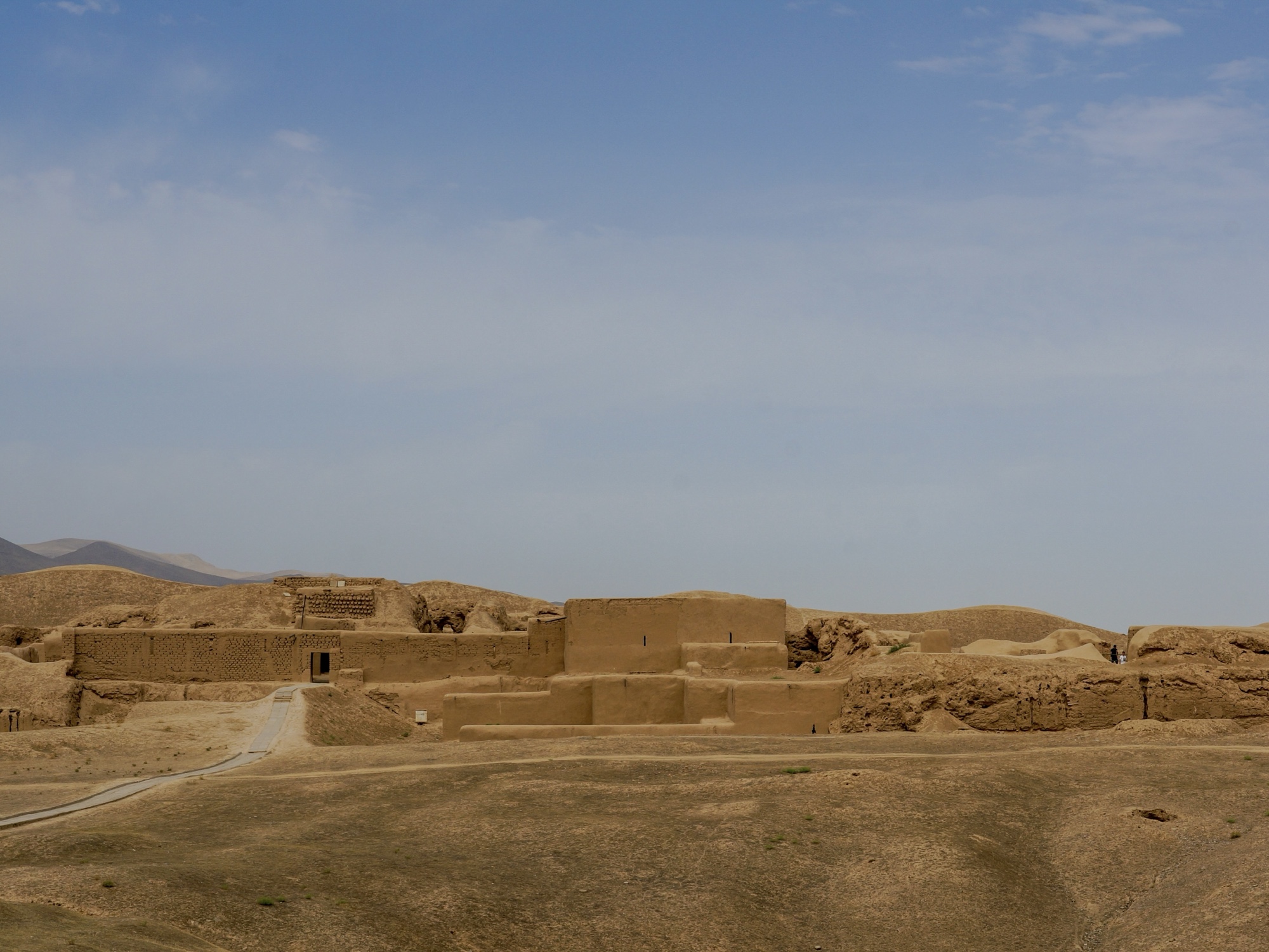
We then wandered up the hill and heard a little about the history of the site before going to explore it. Nisa was once the capital of the Parthian Empire, and the site contains the remains of various fortresses, temples, and other structures. The walls are largely made of clay and straw, though some sections had more complexity in their structure. Archeologists think that the bricks they used at the site were likely made using camel milk, due to the high levels of calcium found in them, which apparently makes them very strong. We were told that the decoration of the site showed a blend of the various cultures that passed through the area – some from as far away as the Mediterranean.
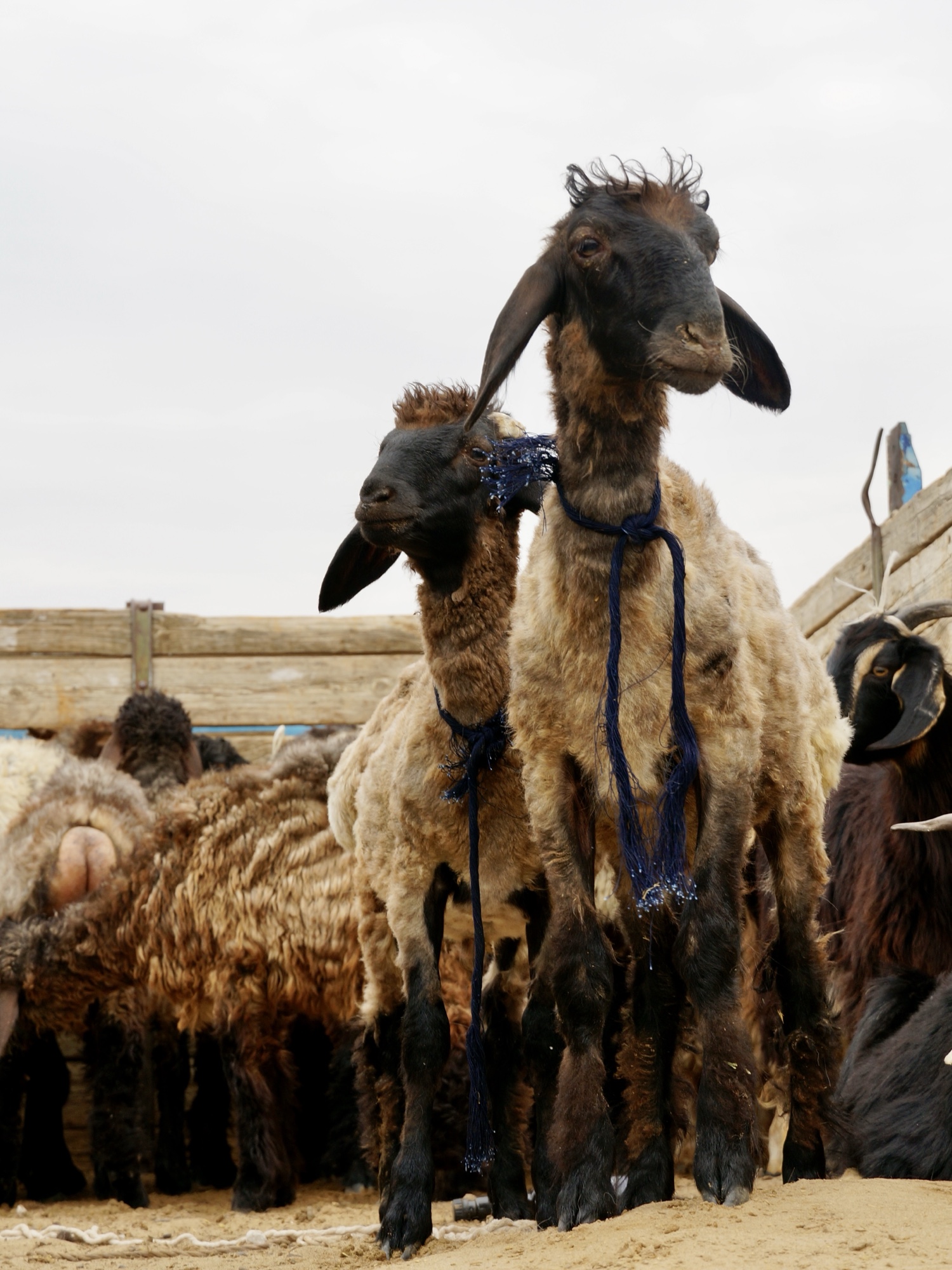
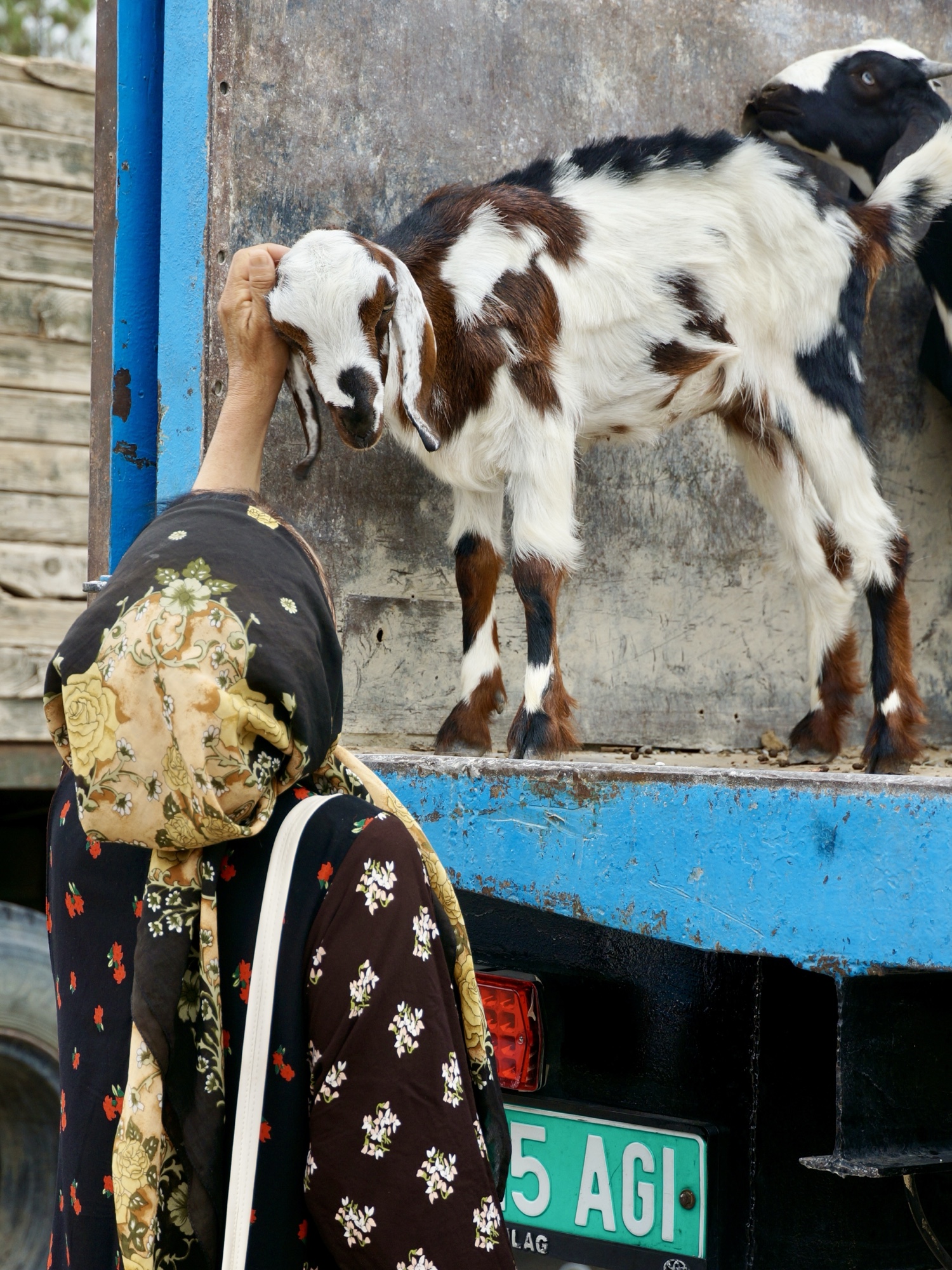
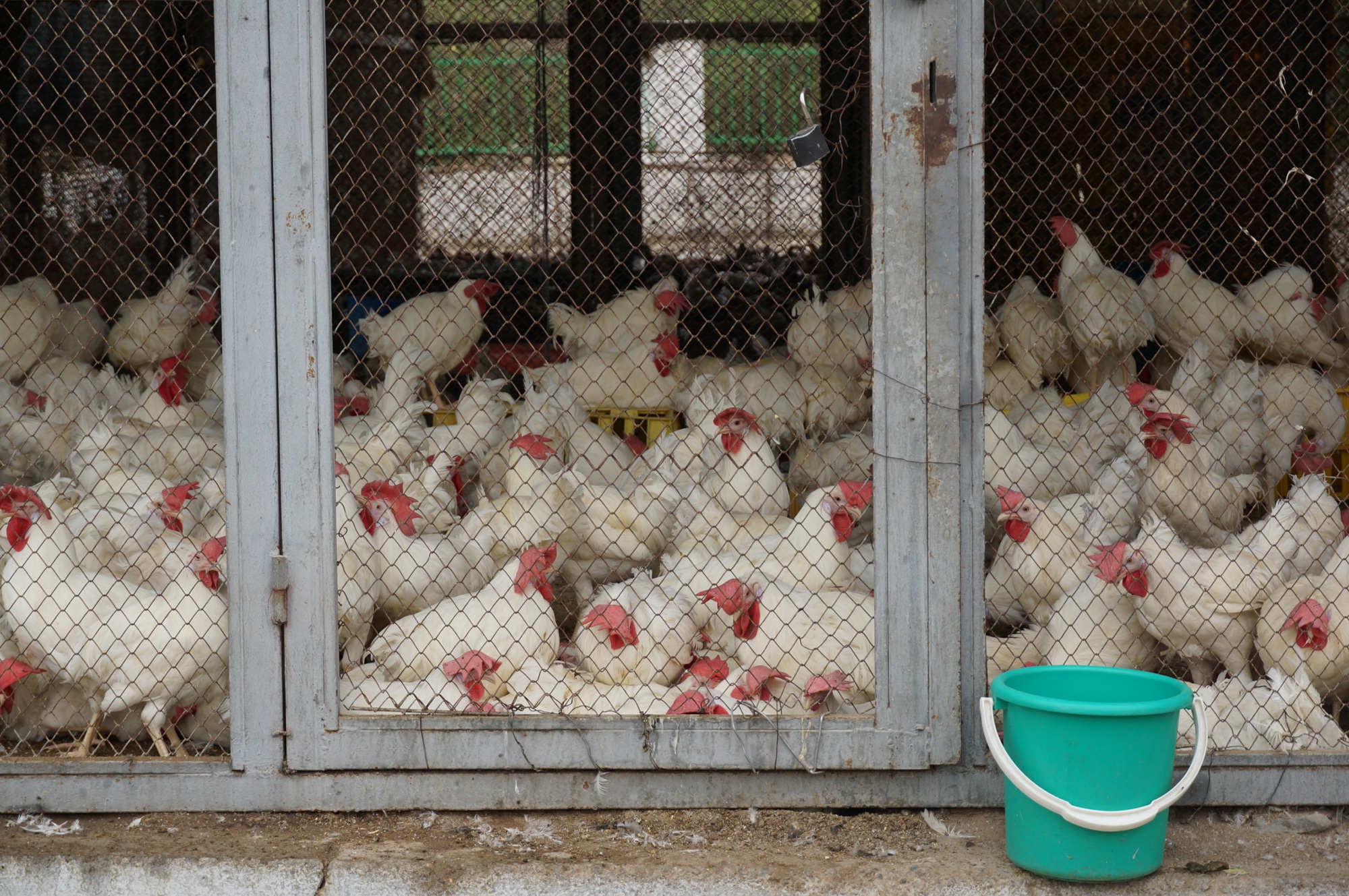
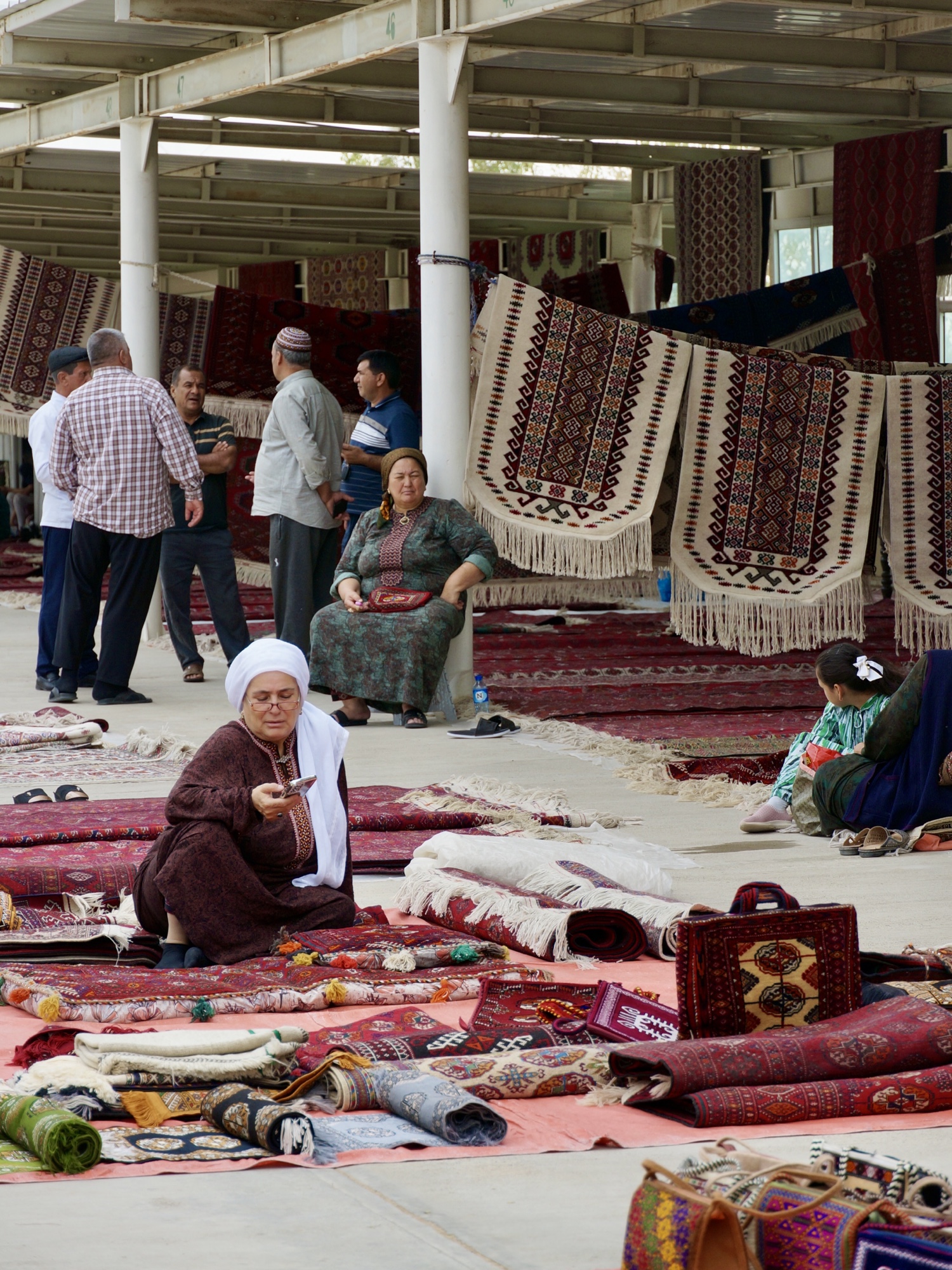
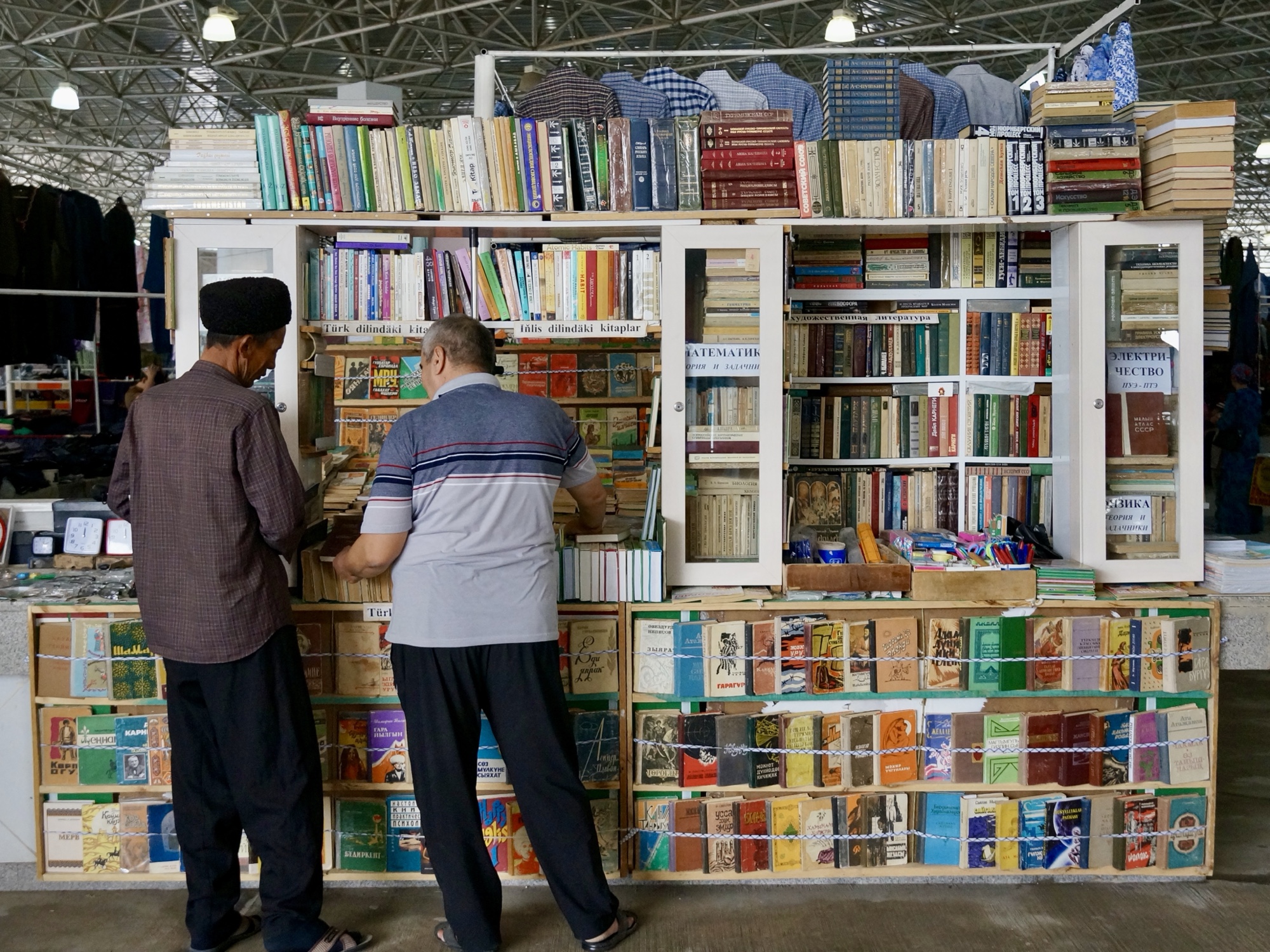
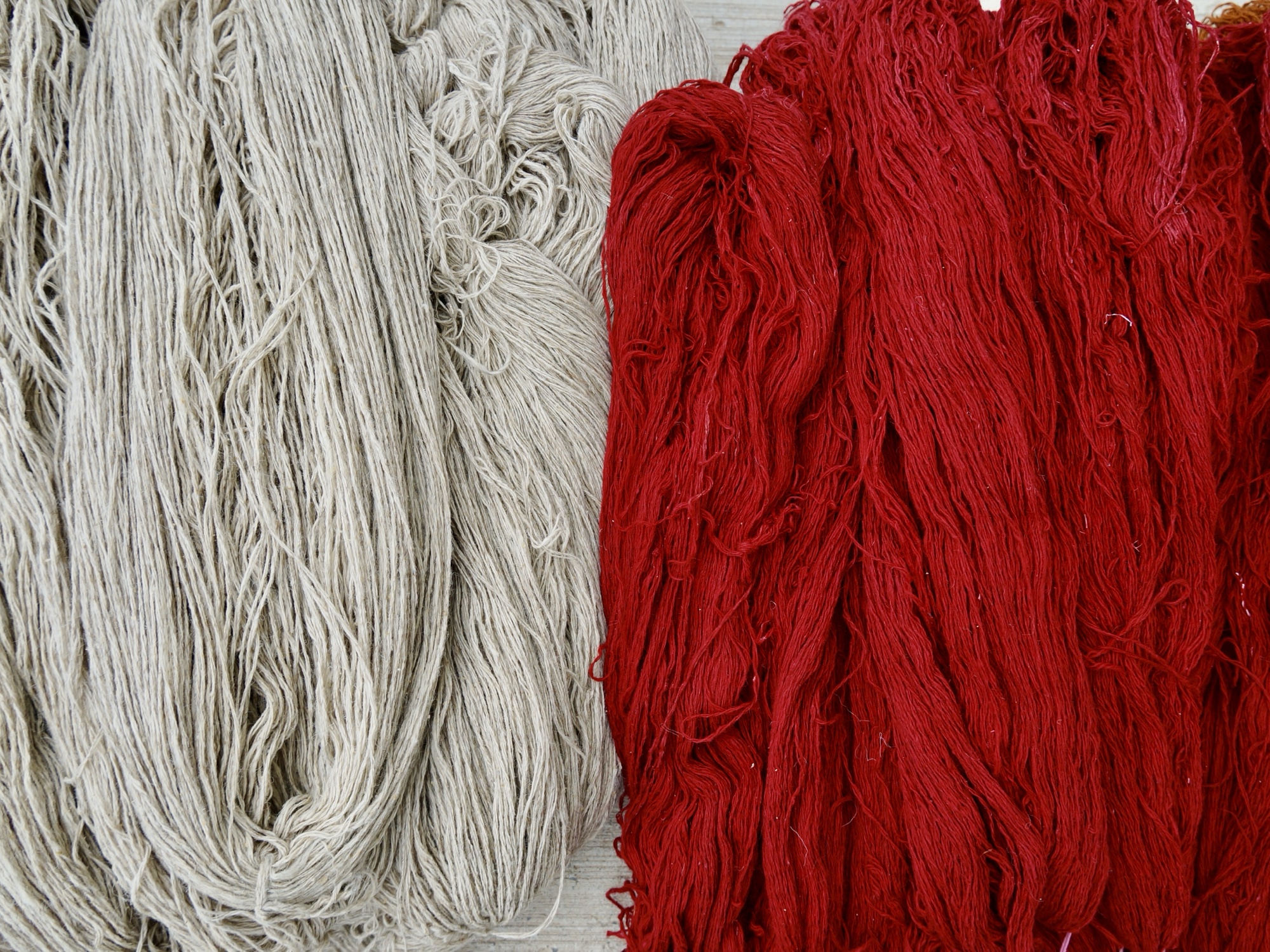
On the morning we left Ashgabat, we stopped just outside the city at the Sunday Bazaar, Turkmenistan’s largest market. We were taken there specifically to see the carpet market and the livestock market, but you can also buy vehicles, books, clothing, household appliances, yurts, and probably anything else you can imagine too. The whole market is laid out in the pattern of a traditional Turkmen carpet. It was interesting enough seeing what was available for sale, but what I really enjoyed was finally seeing some people! We saw more people in an hour at the markets than we had in the previous three days combined! Everyone seemed lovely, and quite curious about this group of foreigners that was visiting – we received lots of smiles as well as several hellos and good mornings from people trying out their English.
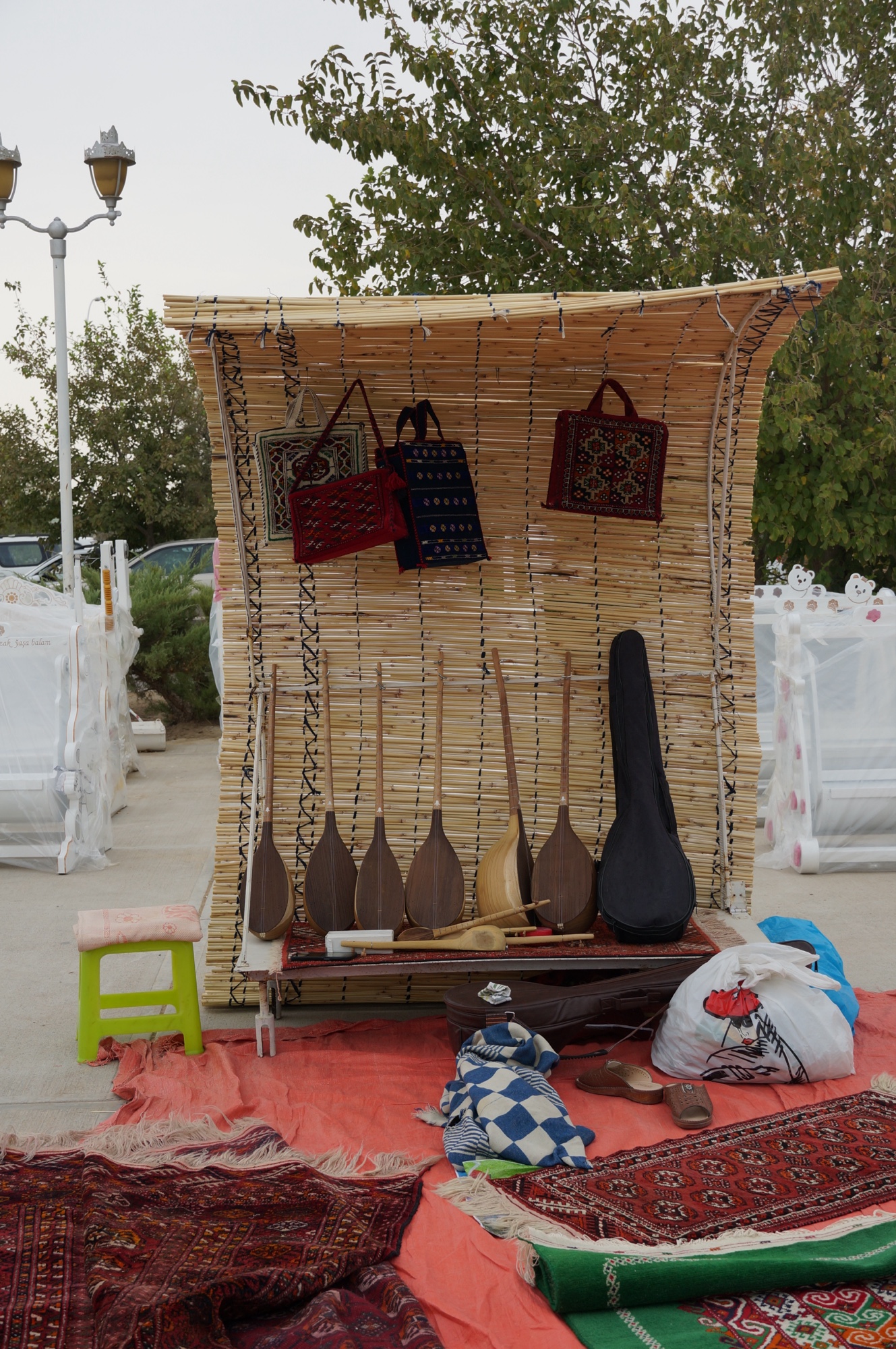
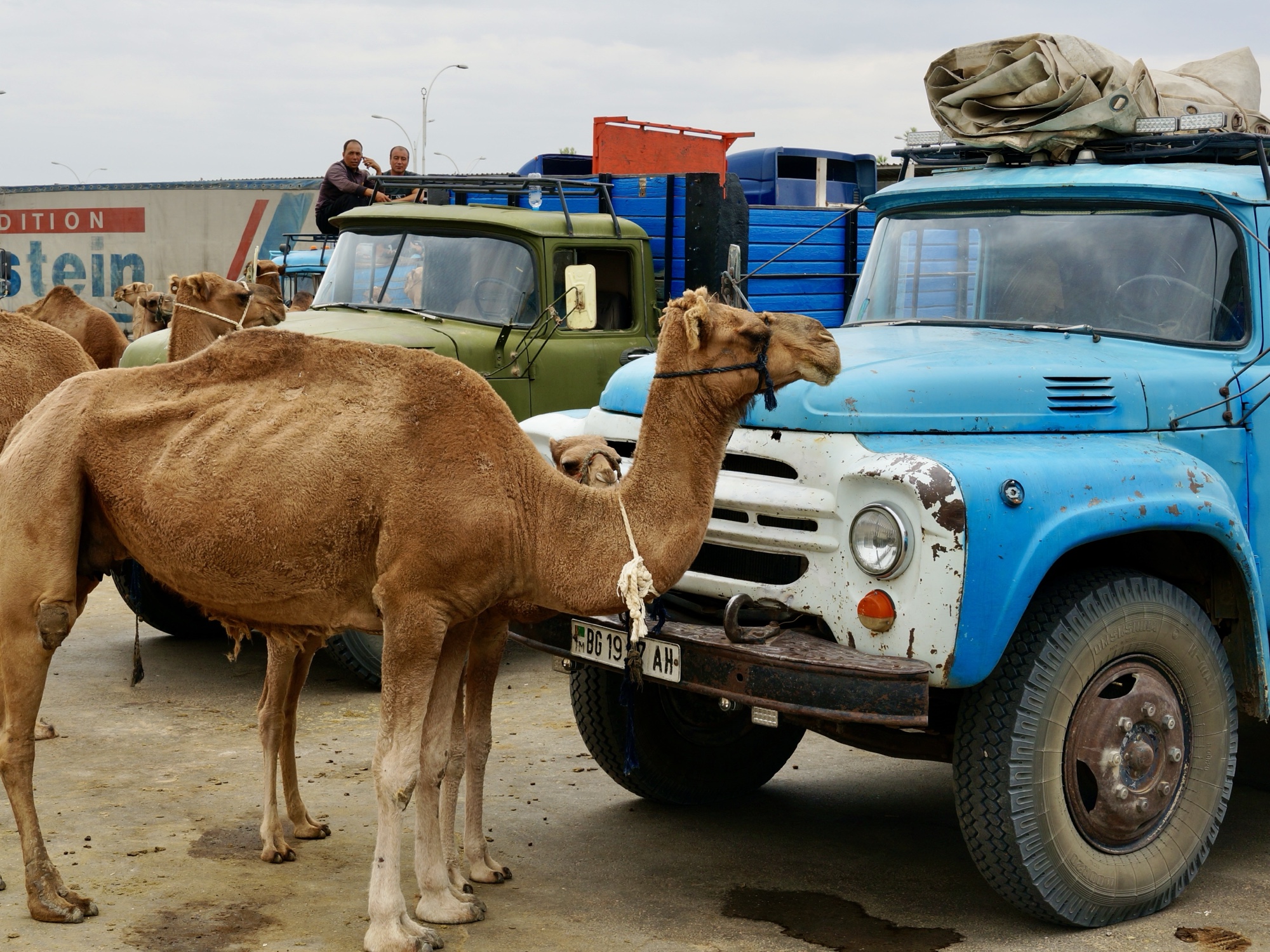
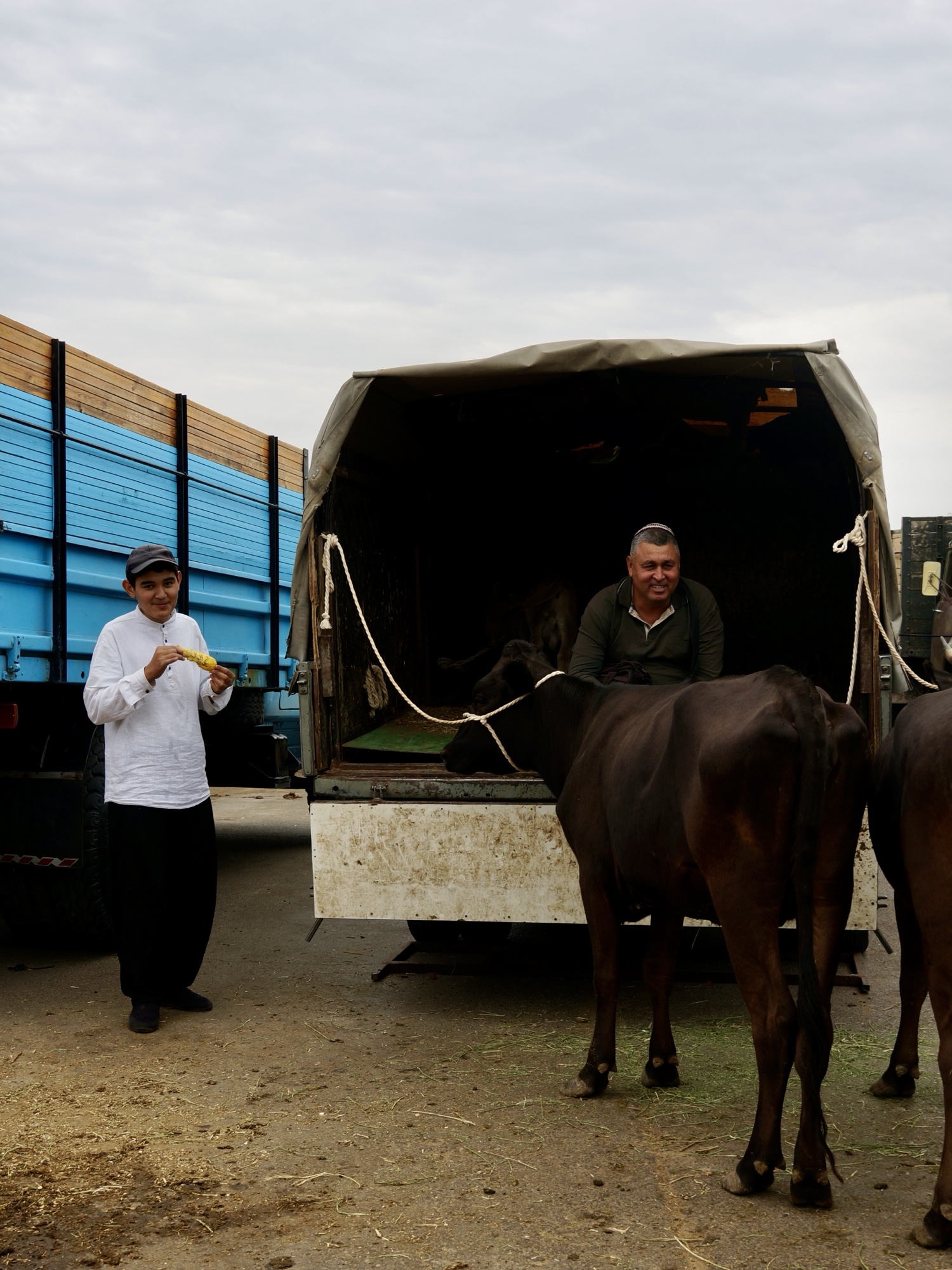
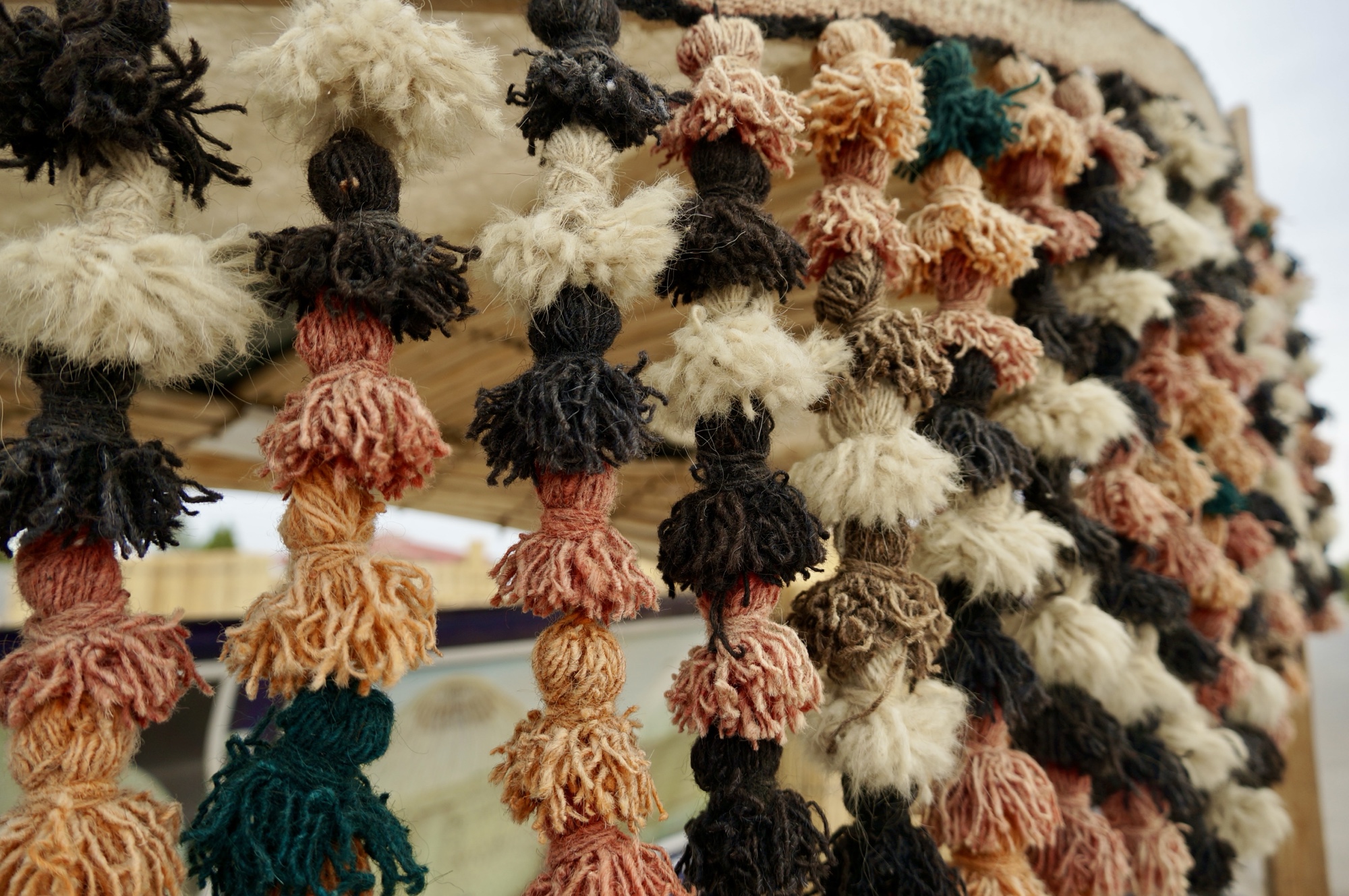
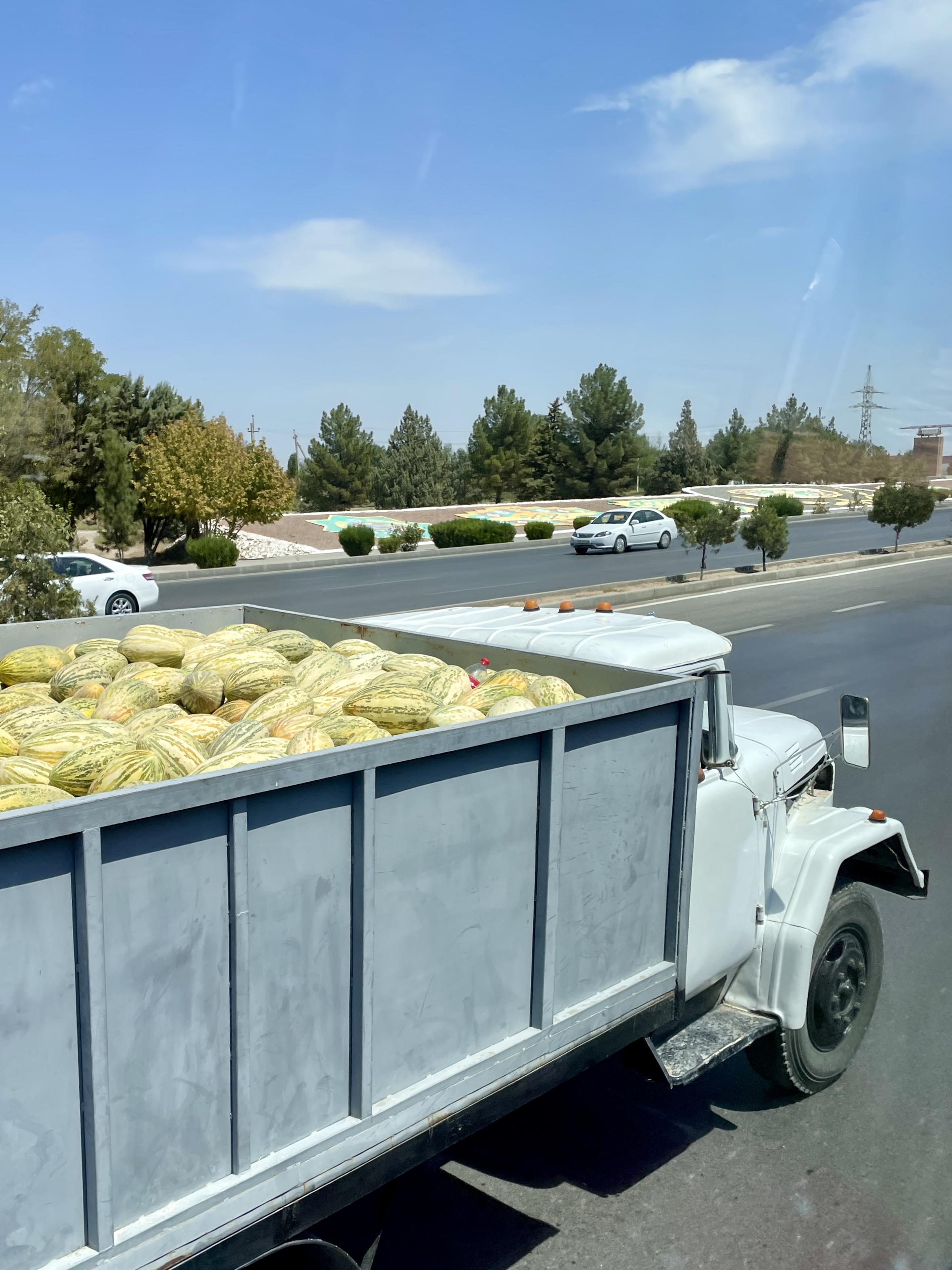
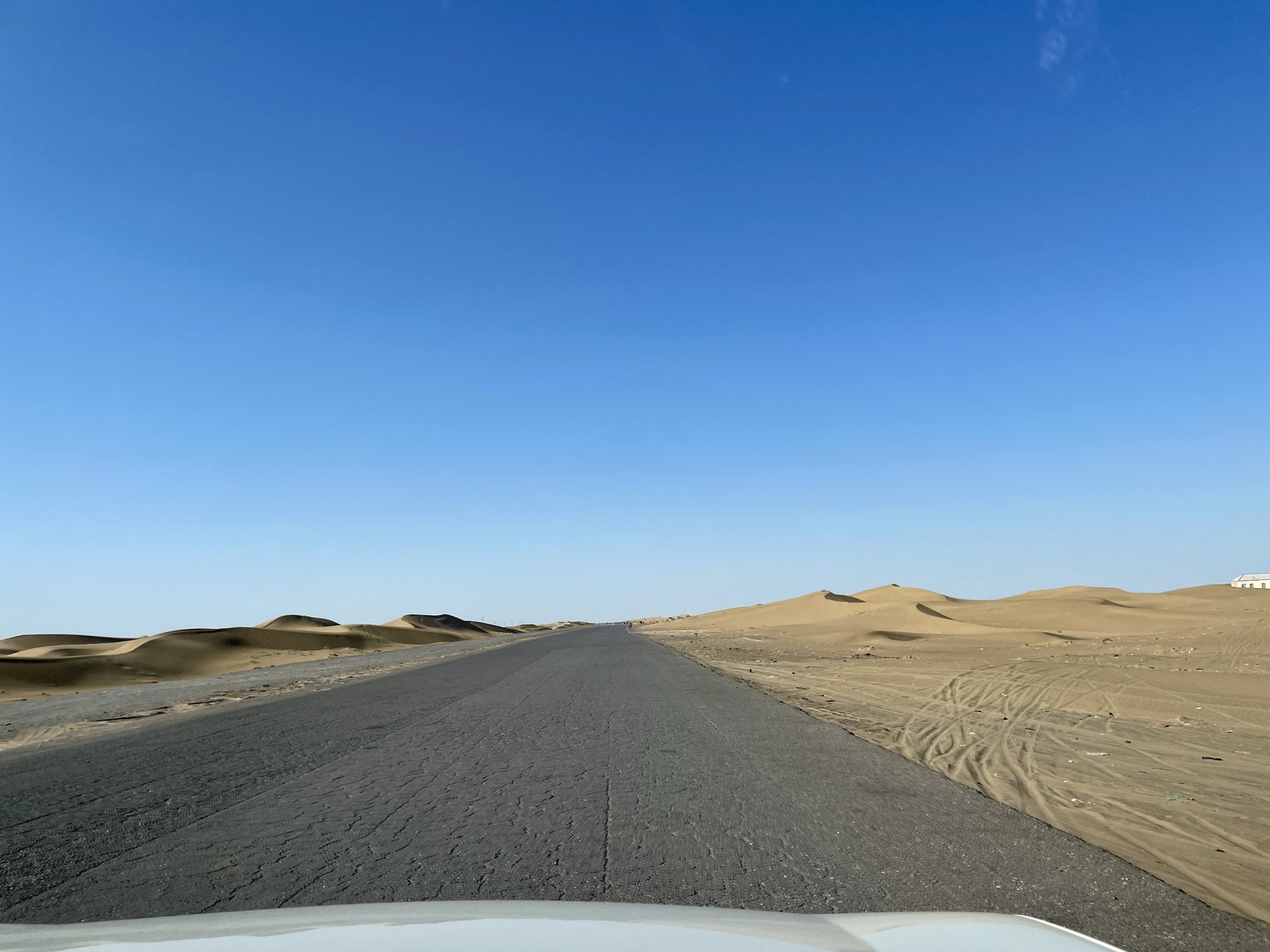
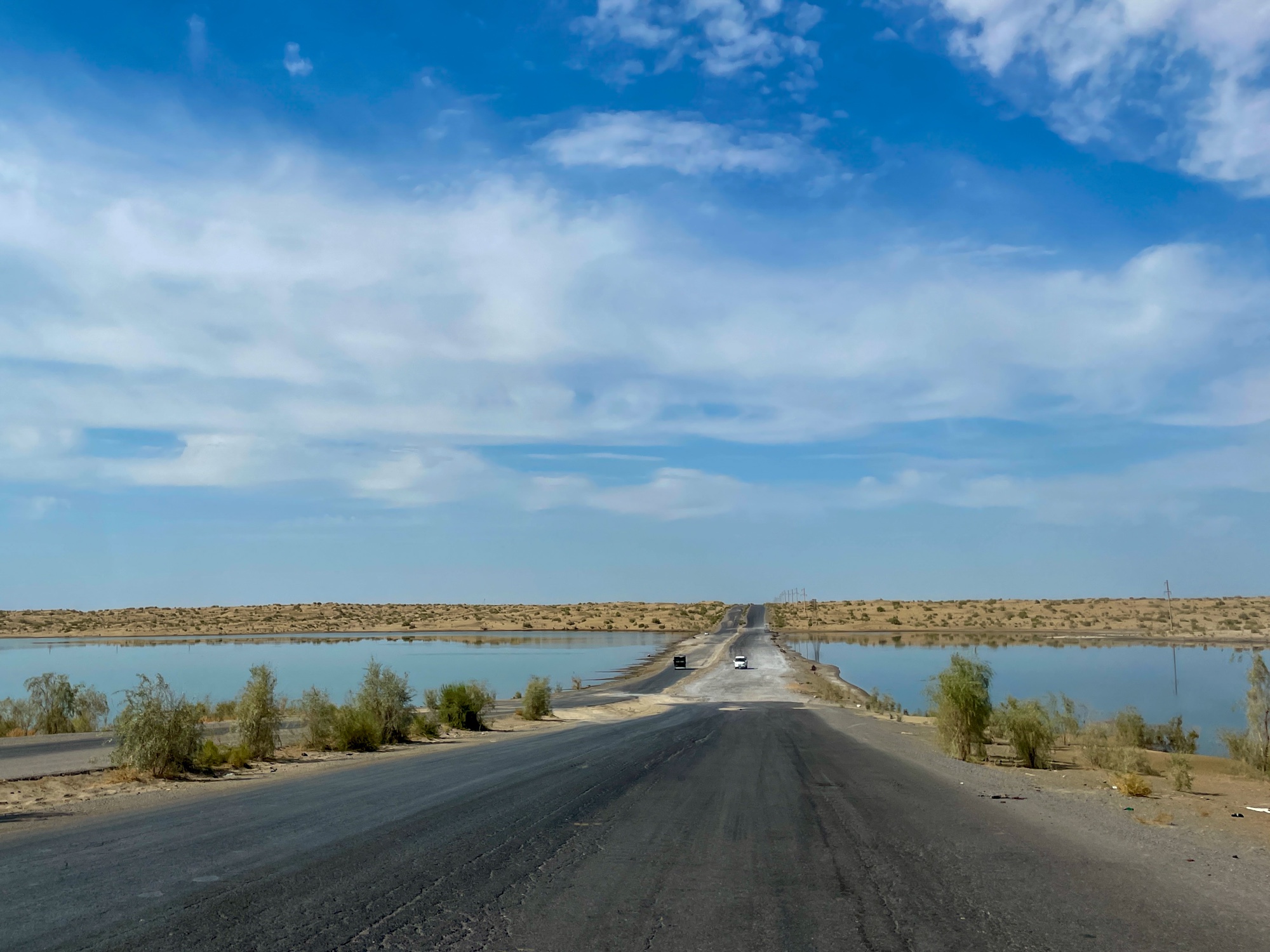
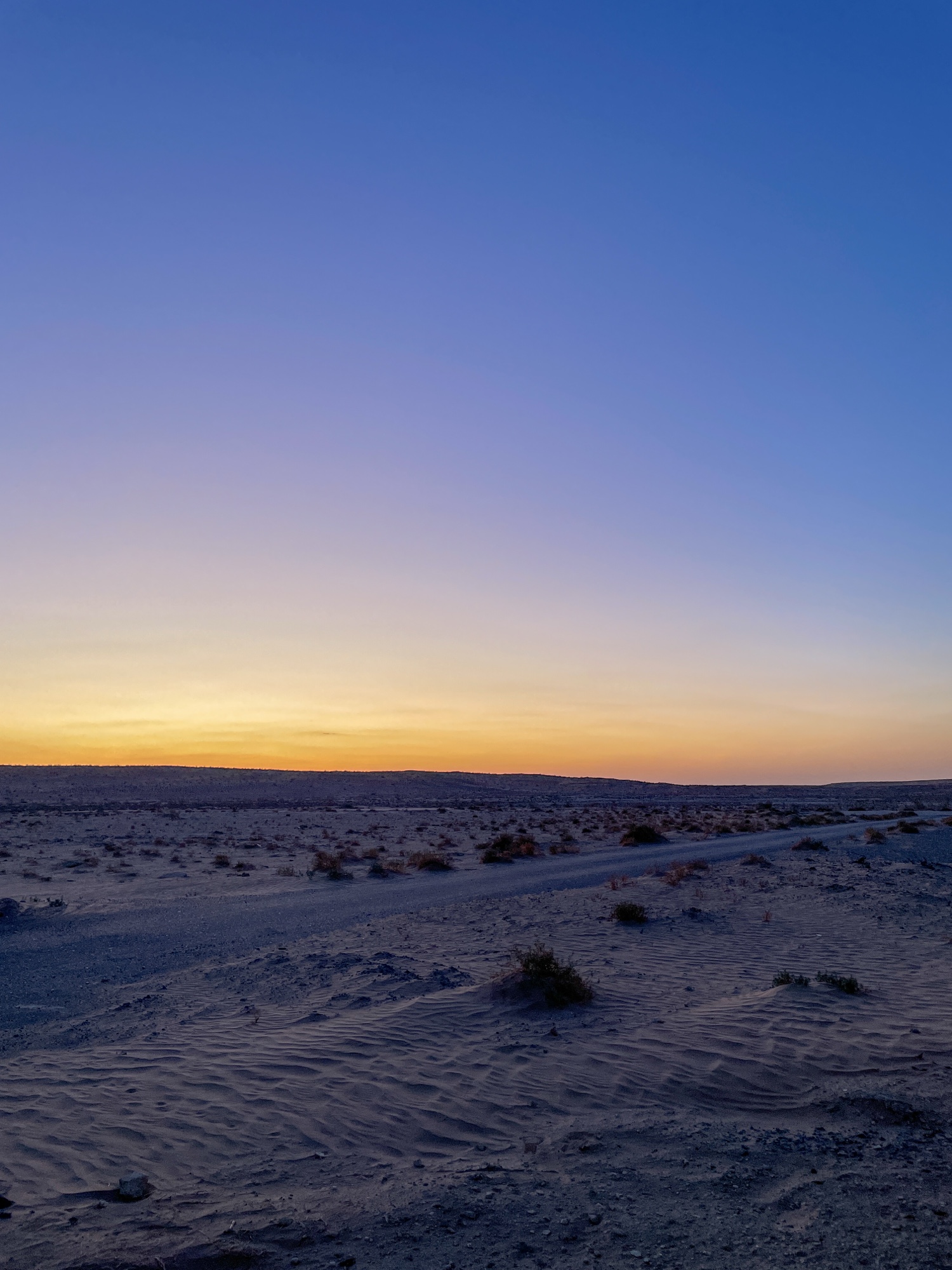
After the markets, we got on the road headed north and swapped the city for the desert. It was a long drive, and the road was in very poor condition, but it was an interesting trip seeing the interior of the country. Outside of Ashgabat coloured vehicles are allowed, but still the large majority of cars we saw were while. The houses throughout the country were like those on the outskirts of Ashgabat – white with green roofs. On the roads, no one stuck to their side of the road, or even to the actual road itself, as cars and trucks swerved all over the place, trying to avoid the potholes that seemed to make up more of the road than not. On several sections people had taken to just driving through the sand on the side of the road instead of bothering with all the swerving.
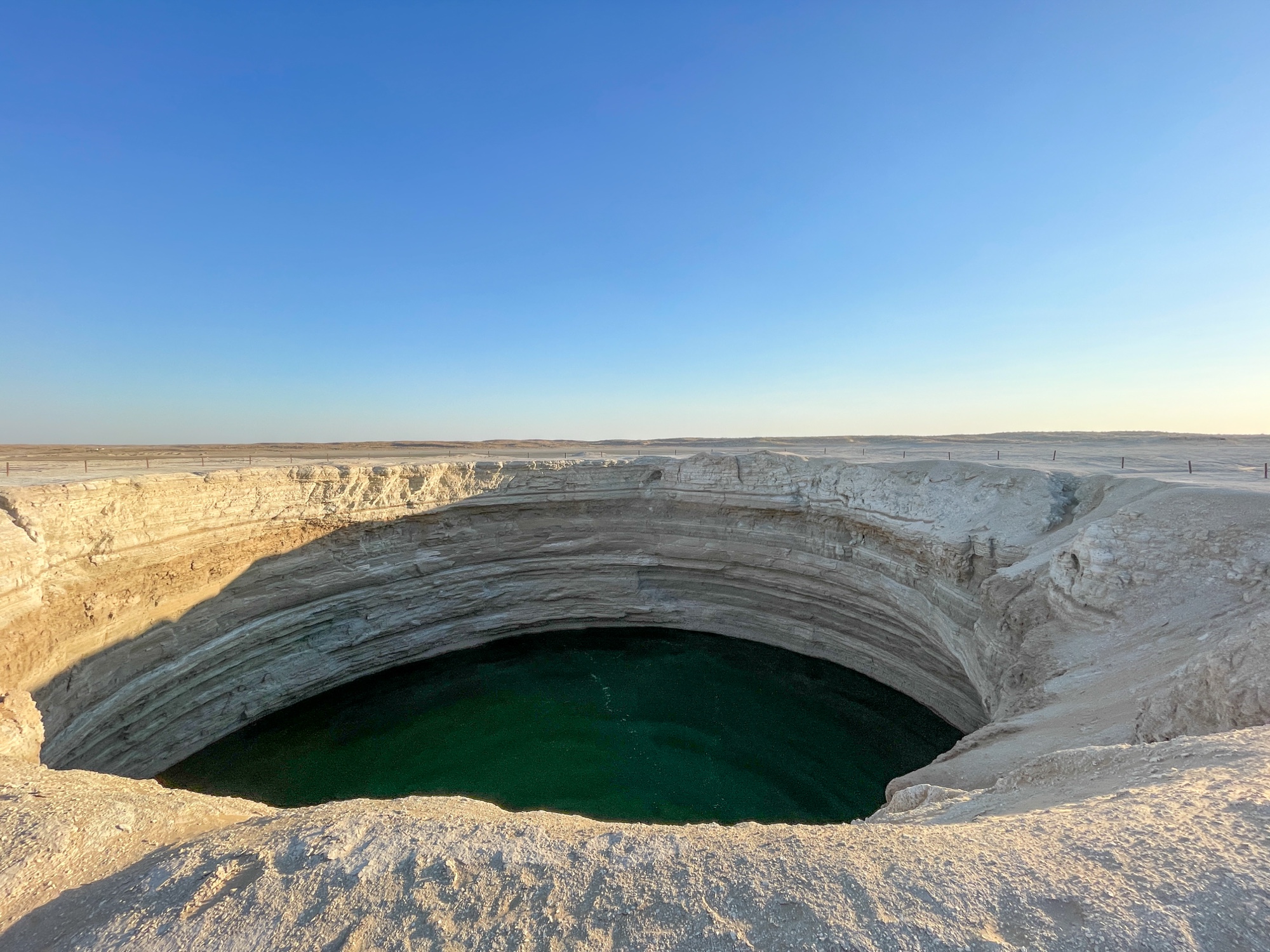
After several hours’ drive we stopped at the first of two natural sinkholes that we were to visit. They were both caused when underground pockets of natural gas had collapsed, and this first one had since filled with water. Natural gas is still being released, and you can see it bubbling up through the water.
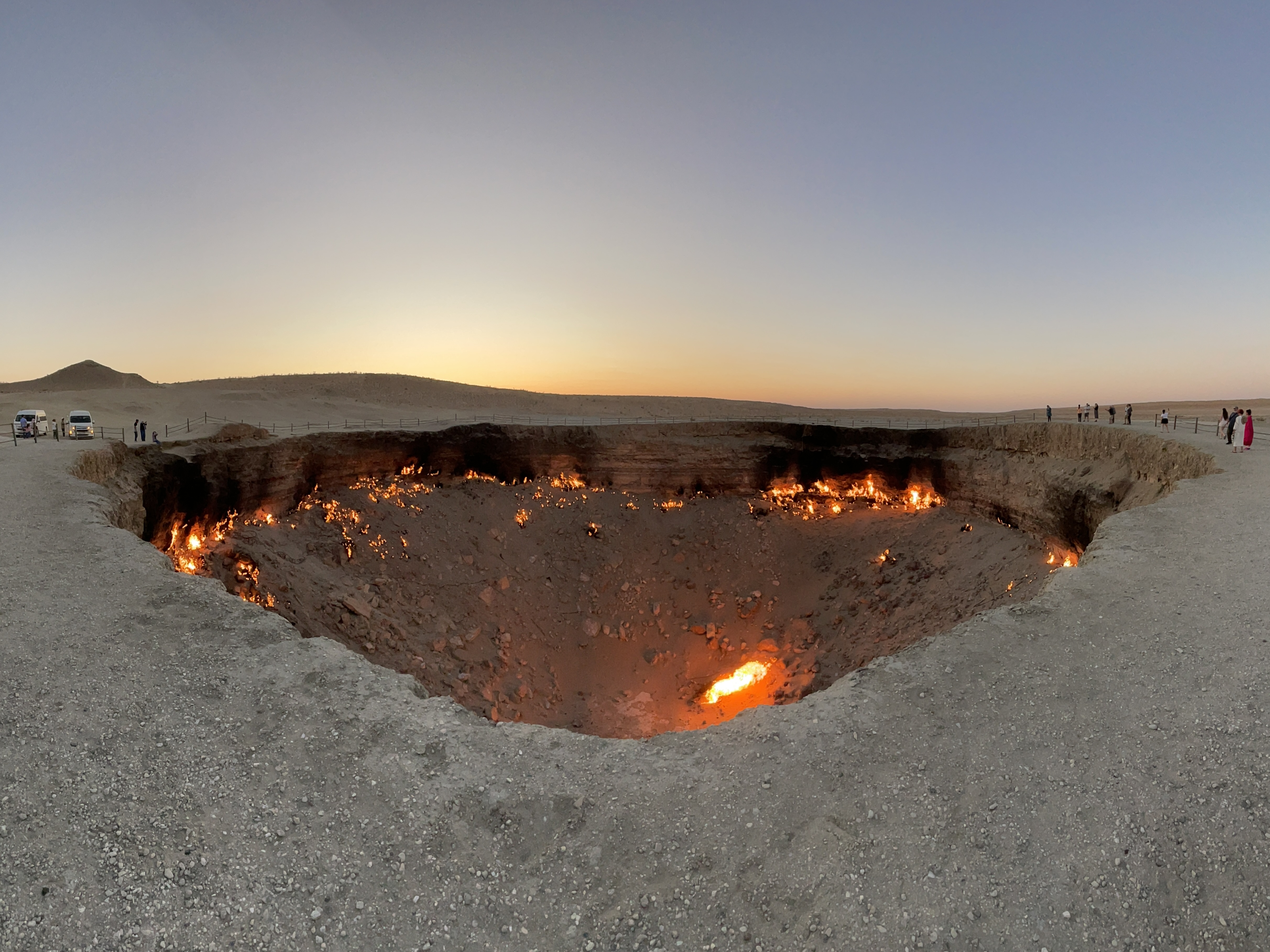
The second sinkhole was just filled with mud, and had a single flame in the centre, where the natural gas has been set alight. These two natural holes were a taster of what was awaiting us a little further down the road at our destination for the day: Darvaza.
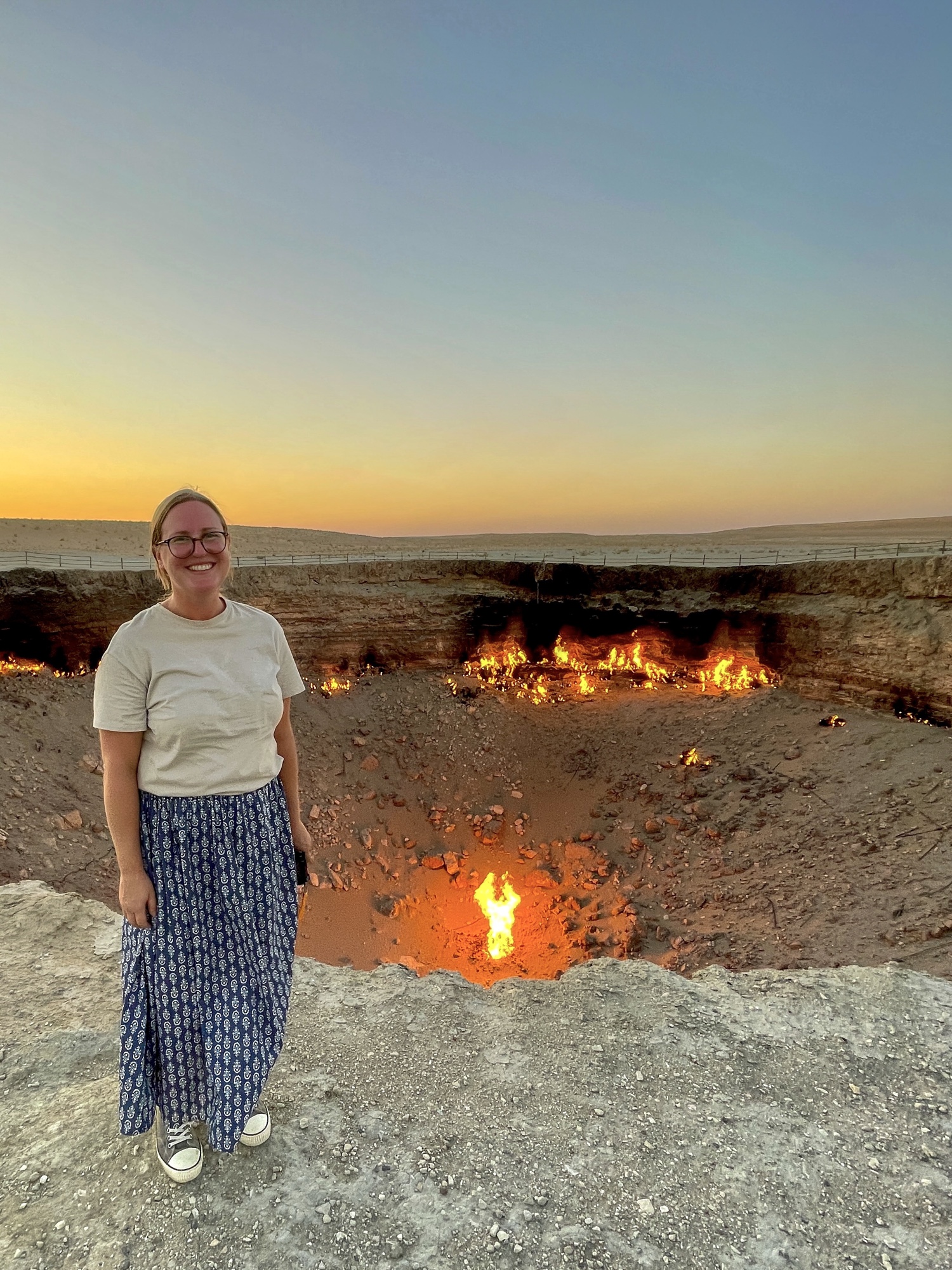
Unlike the sinkholes, the crater at Darvaza was manmade, albeit accidentally. Drilling at the site caused a gas pocket to collapse, and, like the other, smaller site, the gas was lit on fire to keep track of what was going on. It was predicted that it would burn out in a few months, so the crater was left there to be monitored. That was in 1971, so their estimates were a bit off, but in recent months the amount of gas being released through the crater has apparently been getting less and less, so the source might finally be getting exhausted. Despite this, the crater remains on fire, which is a rather unusual sight.
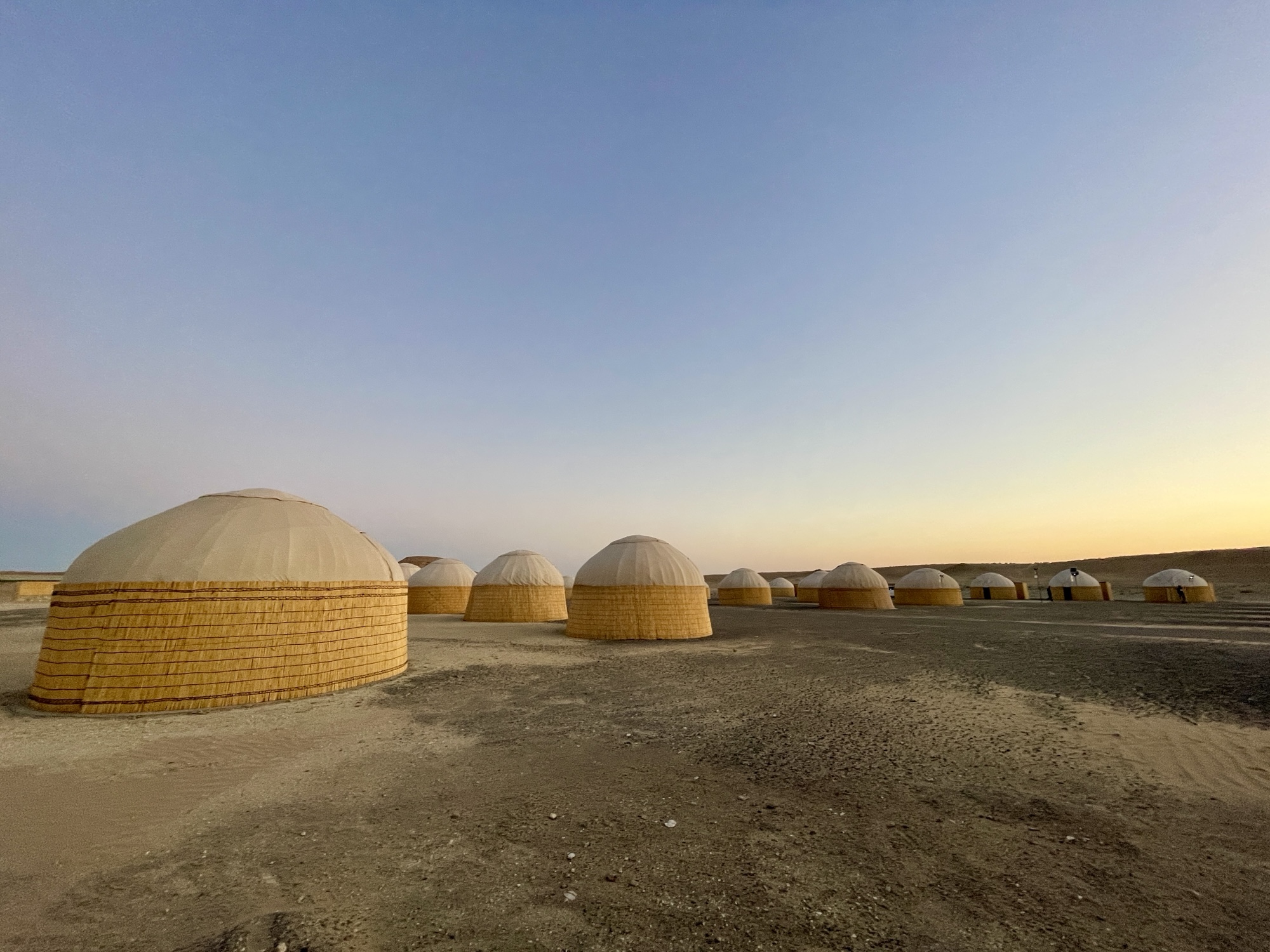
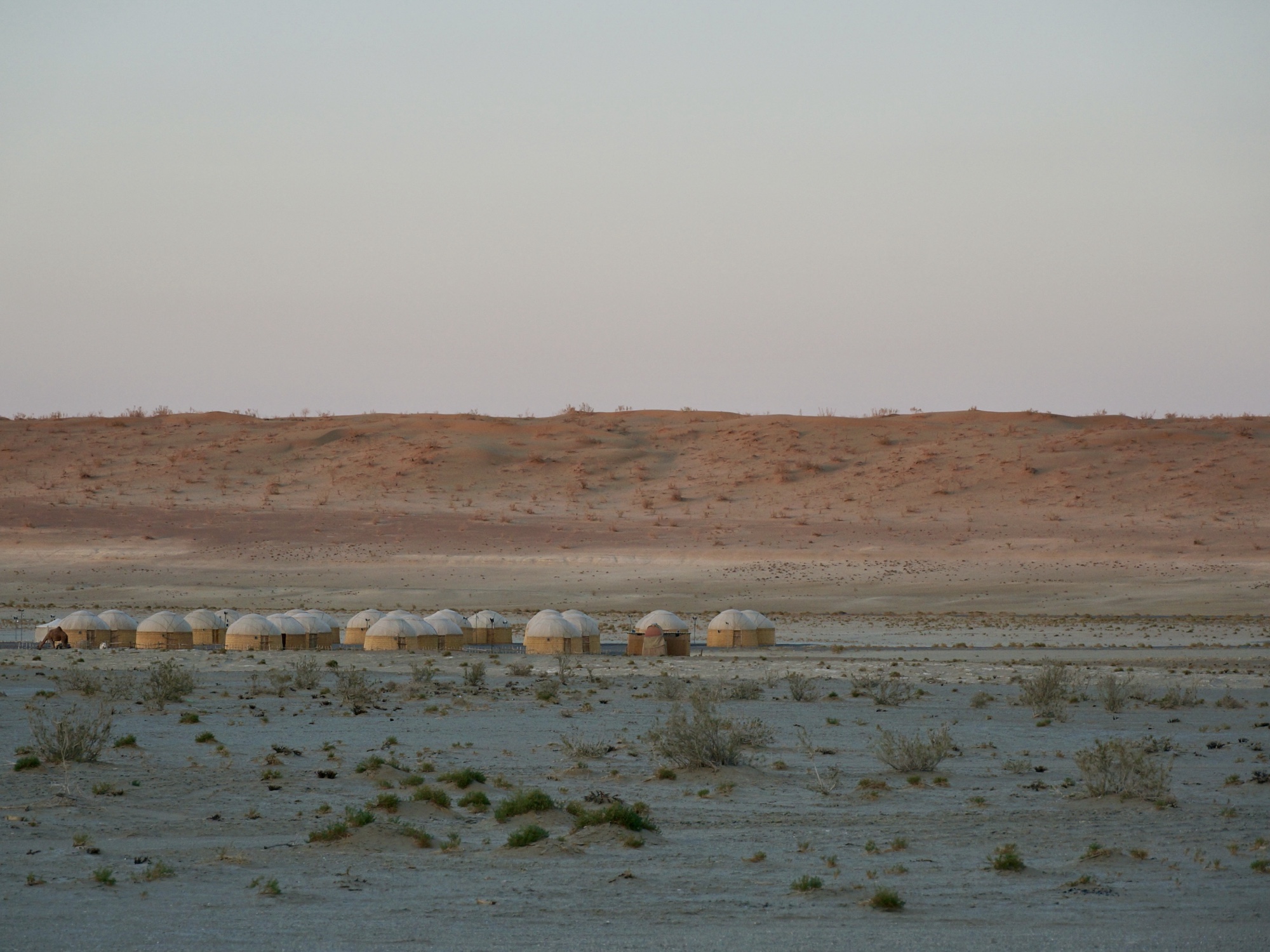
We spent the night just metres away from the crater in a yurt camp, which was an experience in itself. Once night arrived the hedgehogs came out and were scurrying around the campsite, which was a novelty. It wasn’t the most comfortable night of my life, but it also wasn’t terrible, and we were back on the road (and the potholes) again by 6:30 the next morning.
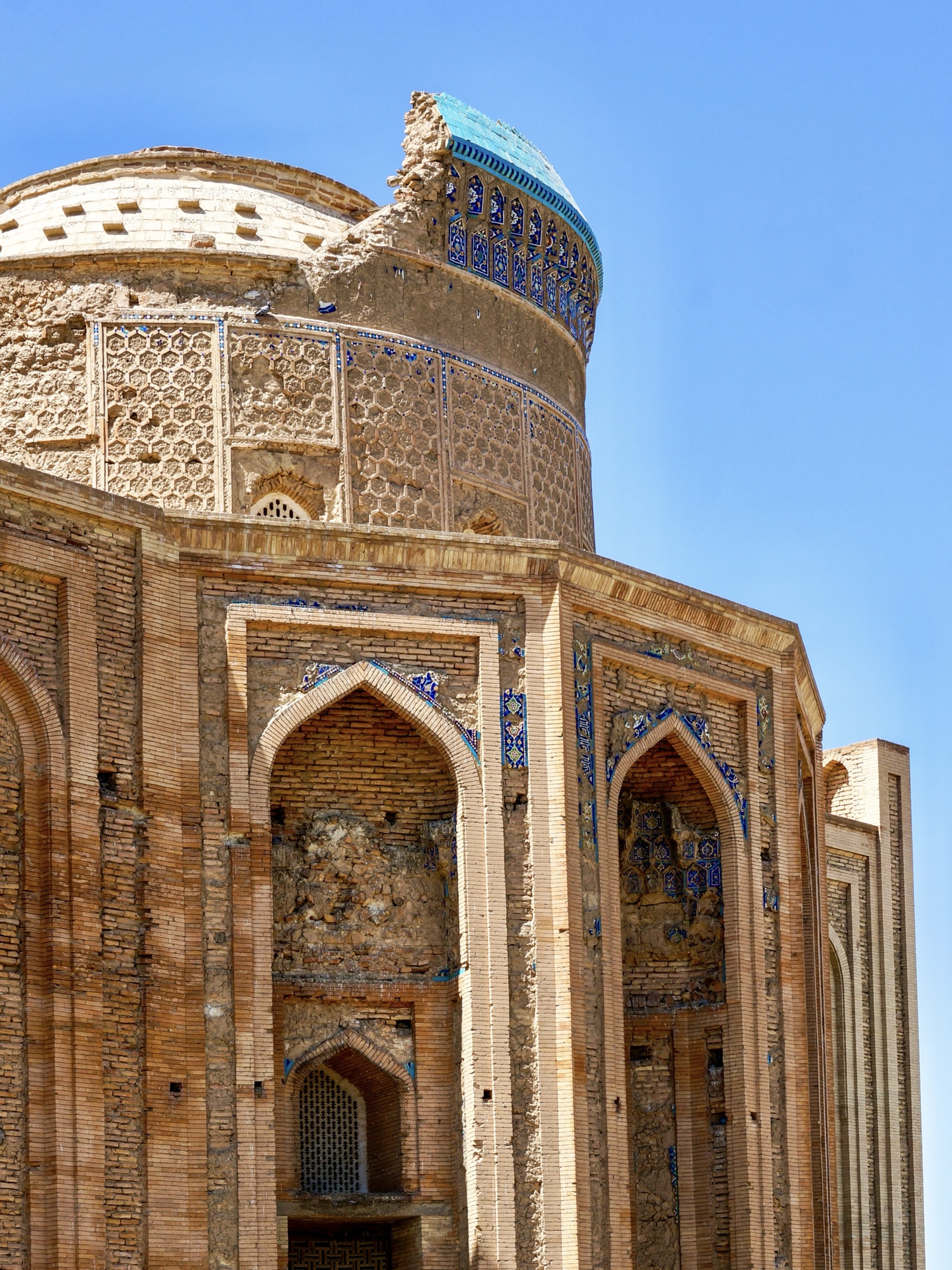
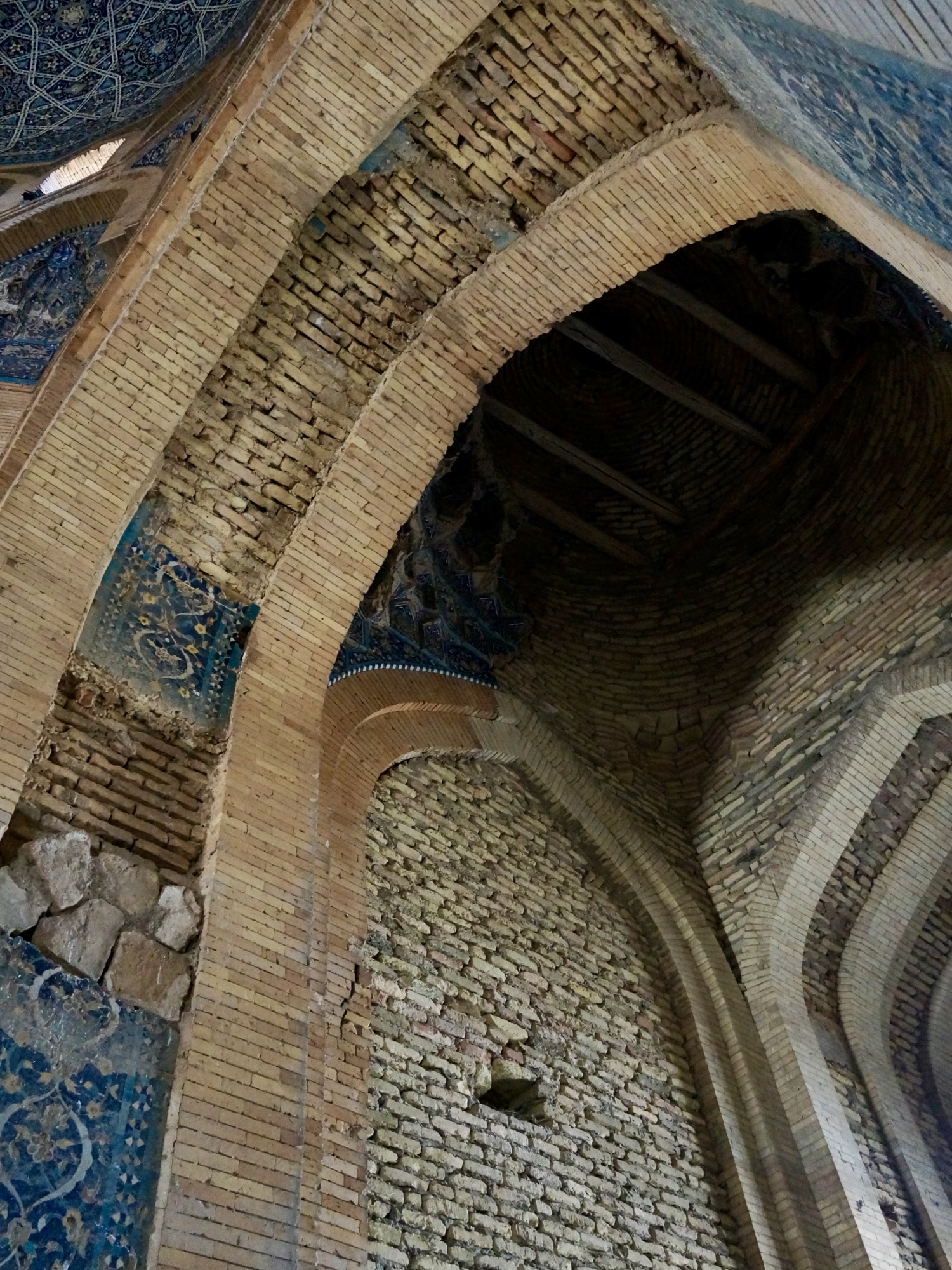
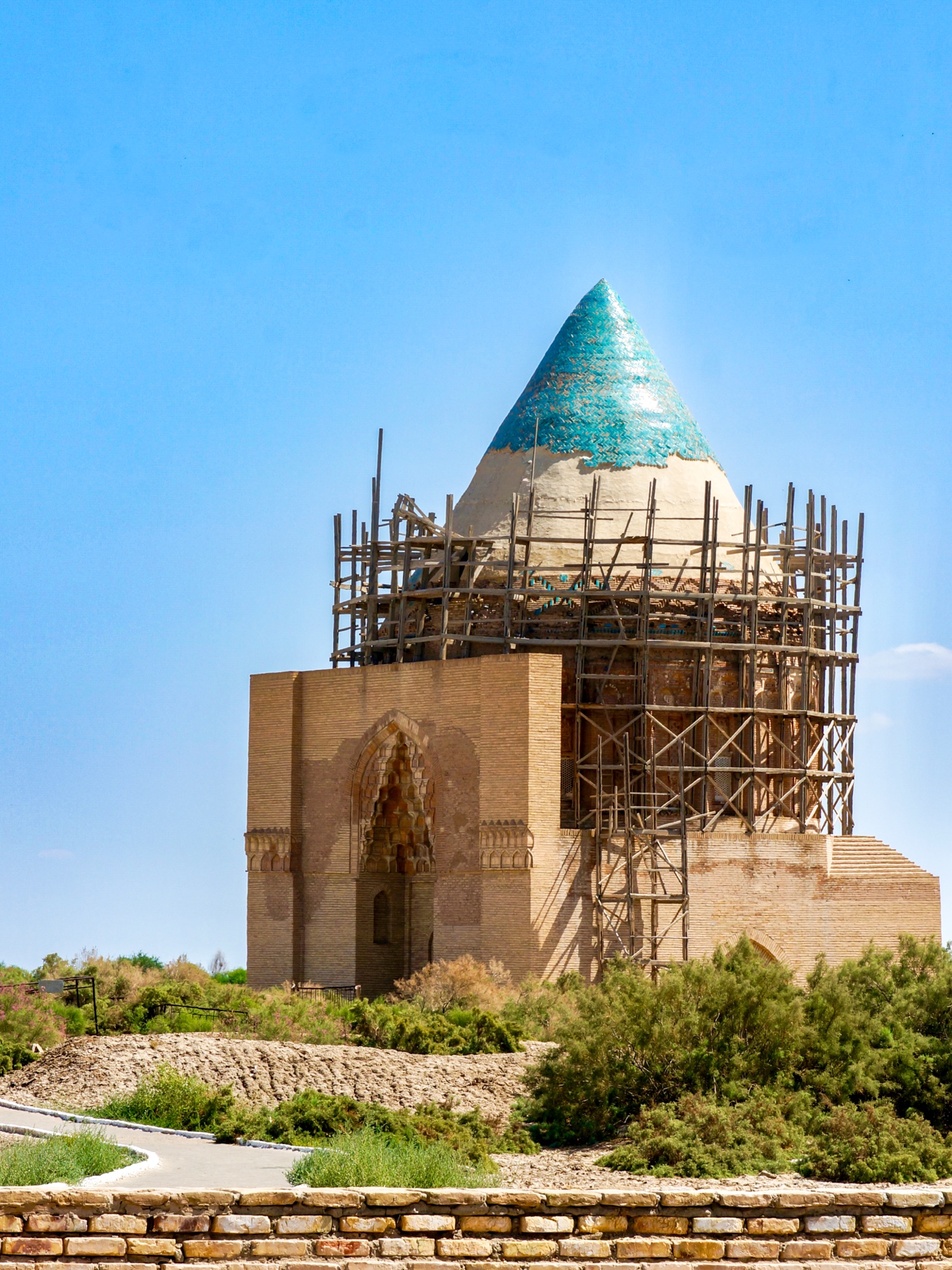
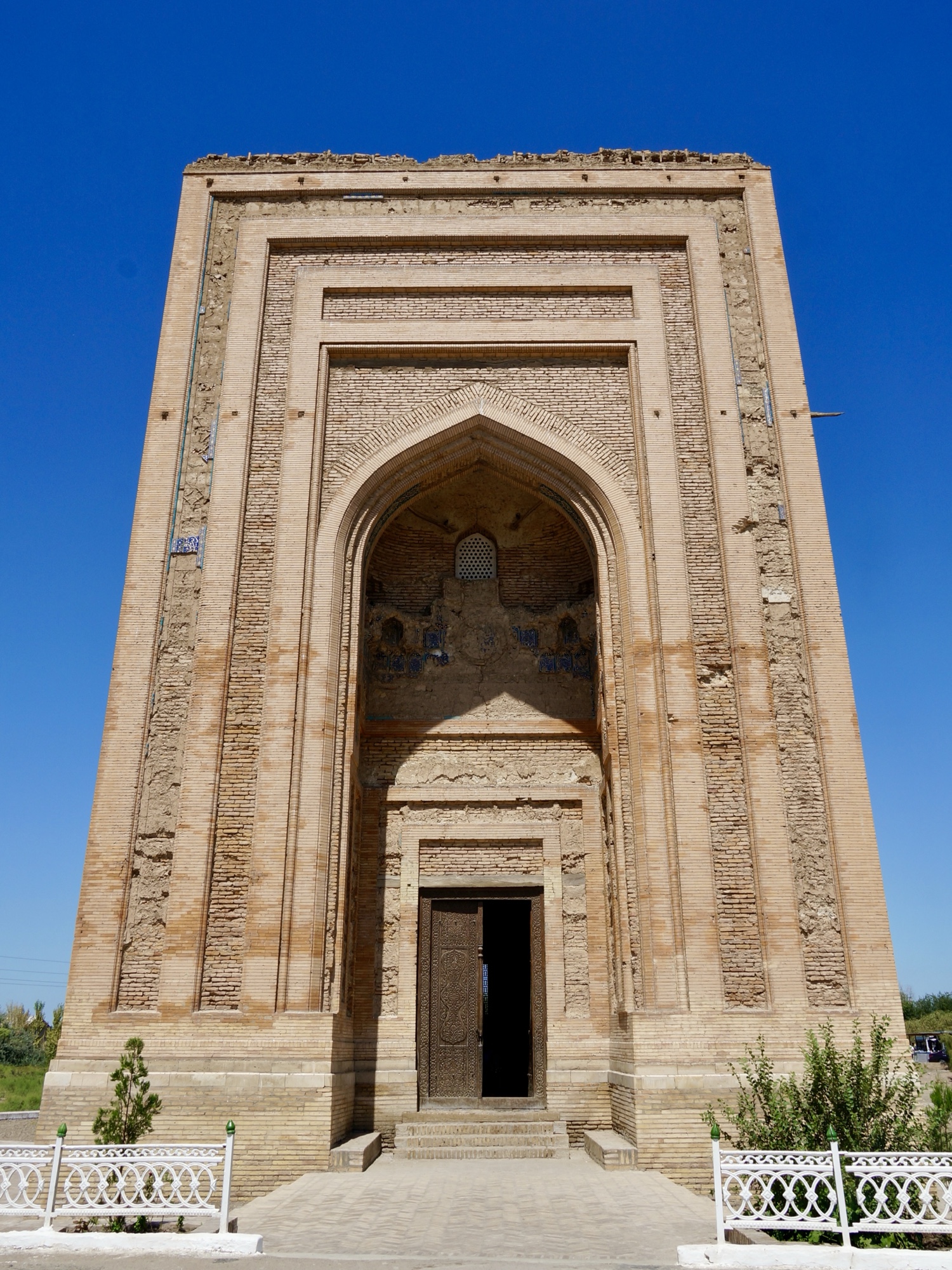
Our final day in Turkmenistan was largely spent driving to the north of the country where we crossed the border into Uzbekistan. Before that, though, we made a stop at another of Turkmenistan’s World Heritage sites: Kunya Urgench. It’s an ancient Silk Road settlement, and a sacred place for the Muslim population who consider three trips here to be equal to a visit to Mecca. The buildings are largely in ruins, but are still very impressive. The local people visiting the site seemed very curious about us being there – several asked for photos with us, and I very much enjoyed watching a group of young boys trying to convince each other to come over to us and say hello.
Finally, some more Turkmenistan facts for you:
- Petrol costs between NZ 10-15 cents per litre (or 50-75 cents at the official exchange rate)
- Residents pay less than NZ$100 per year for their electricity, gas, water etc. Before 2019, these were all provided for free to citizens.
- Income tax is around 2%.
- Turkmenistan ranks as one of the worst countries in the world for freedom of press and censorship of information.
- 80% of the country is desert.
- Many of the monuments are the same size in metres as the year they were built – for example, the Neutrality monument was build in 1995, and is 95m tall.
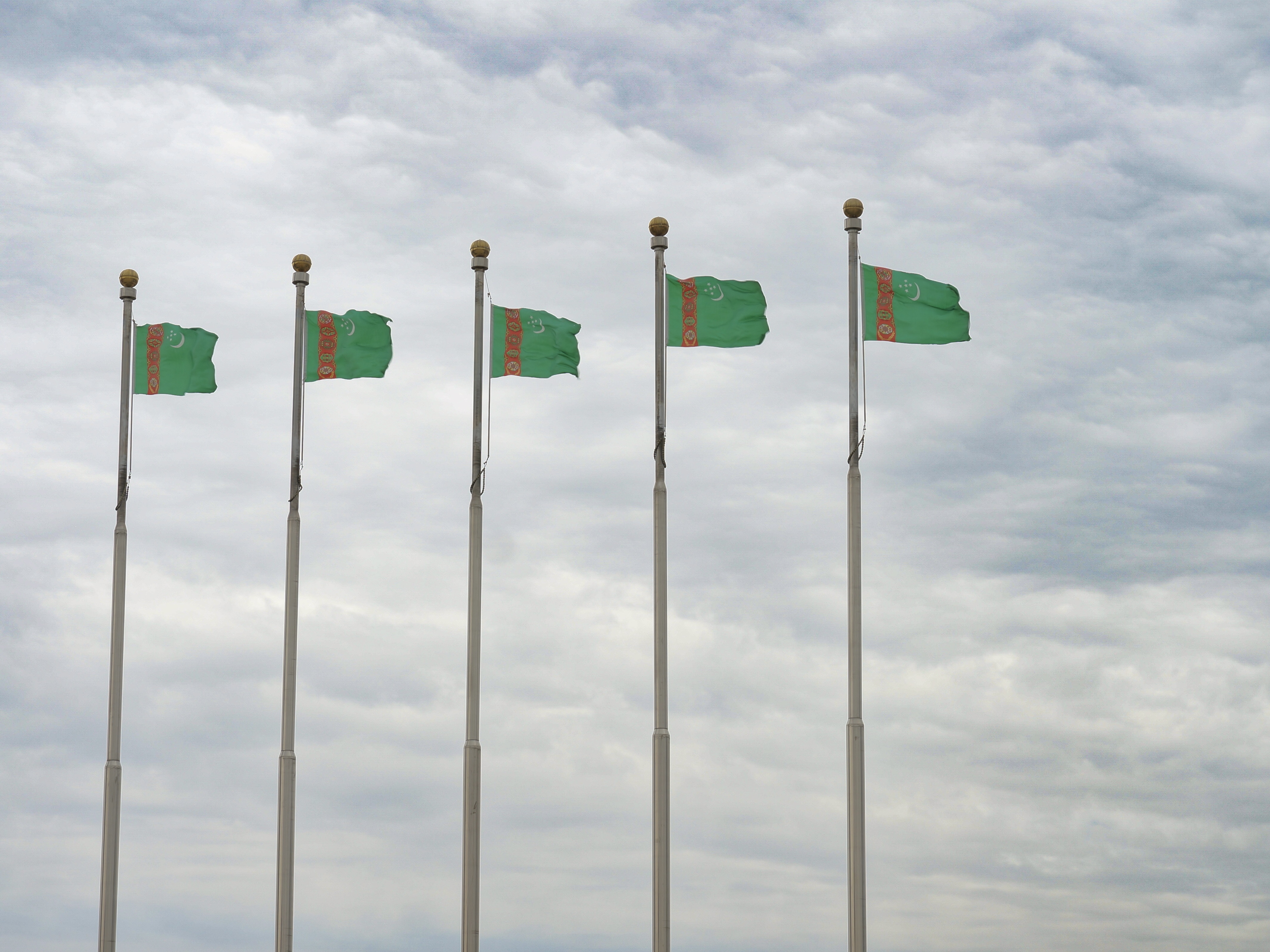
- The Akhal-Teke horse breed is a national treasure. The horse on the national emblem is a real, live horse, and once it dies, the image on the emblem will be replaced with that of a new horse.

 emilyonearth
Leave a reply to mysteriouslyfacede9237511e Cancel reply